
When the automobile first became popular at the beginning of the 20th century, it changed the landscape of the United States. Not only were there more roads being made and paved, automobile-friendly roadside lodging began to pop up as well — first with autocamps, then with cabin camps and cottage courts, and finally with motor courts, or motels.
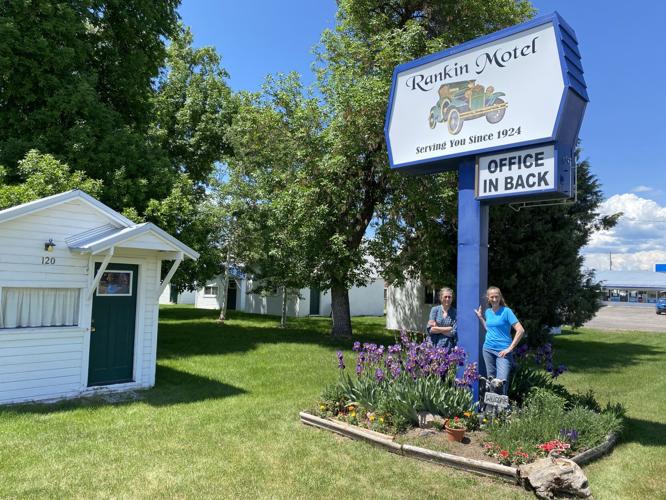
There’s a spot right here in East Idaho that played witness to all that change, and it was recently adopted into the National Register of Historic Places — the Rankin Motel just outside of Ashton.
***
In the first part of the century, because of mass production of automobiles as well as their relatively inexpensive price, people of all classes began regularly traveling far from home. Traditional hotels — generally located in dense parts of town or near the railroads — were often too expensive for your average motorist and inconvenient to stay at when traveling via automobile because there was often no place to park. Thus, people came up with alternatives.
At first, in the 1910s, people did what was known as “gypsying” — camping wherever they pleased, sometimes on public land but often on private property. No longer tied to whatever routes the railroads chose, no longer permanently tied to life in the city, they felt freedom.
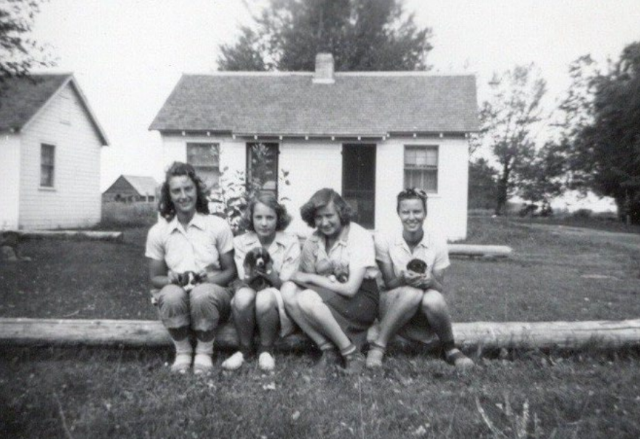
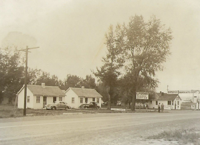
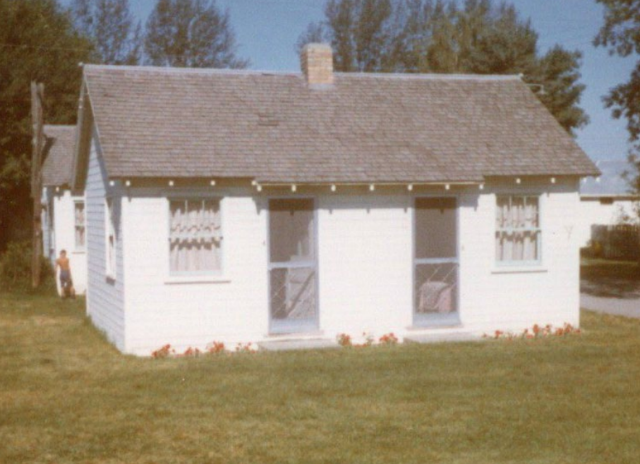
Cottages 2 and 3 at the Rankin Motel from U.S. Highway 20, 1945.
Warren James Belasco wrote of this time period in his 1979 book “Americans on the Road."
He stated, “The migratory motorist could rejoin the ‘ancient human heritage’ of the open road and camp. Cars ended the frustration of not being able to escape for a vacation without ‘a sense of being thwarted.’ Even the ‘weekend wild man’ — the overnight autocamper — could touch base with primal roots by driving out of the city for just a Saturday night stay along the road.”
At the time, commentators likened this feeling of wanderlust to a virus — once you got the bug, you had to get on the open road.
“The virus could be cured, much like spring sickness resulting from an inadequate winter supply of greens,” Belasco writes. “This is an essential point, for the ideal result of the trip was to return renewed, rededicated, glad to be back at home and job.”
Eventually, in the early 1920s, landowners and city officials got fed up with people camping all over the place, so cities began to open free municipal autocamps, which for a while were a point of pride. Most of them had public restrooms and communal space for cooking, as well as other amenities. While most campers were broadly middle class, the camps were a melting pot of people from all walks of life.
The utopia didn’t last long, however. Just a few years after the free camps popped up, cities began “taking steps to separate ‘better-class’ tourists from ‘undesirable’ tourists,” Belasco writes. This entailed charging for campsites and limiting the amount of time someone could stay at a campground. The change opened the doors to entrepreneurs, who previously couldn’t compete with the free campgrounds. Soon enough, there were paid campsites all over the country, and the industry was booming.

Cottage 4 at the Rankin Motel.
These entrepreneurs in the mid-1920s, looking to outpace their competition, began to add amenities, thrusting us into the next stage of roadside lodging: the cabin camp.
“Many cabins were little more than wooden tents with dirt floors,” Belasco writes. “Autocampers still provided their own cots, chairs, and camp stoves. Other facilities differed little from regular camps: community toilets, showers, and, occasionally, a central kitchen. At fifty to seventy-cents a night, these shacks were intended for emergencies. Yet they proved popular in good weather as well, for they spared harried motorists the chore of setting up a tent each night and packing it each morning.”
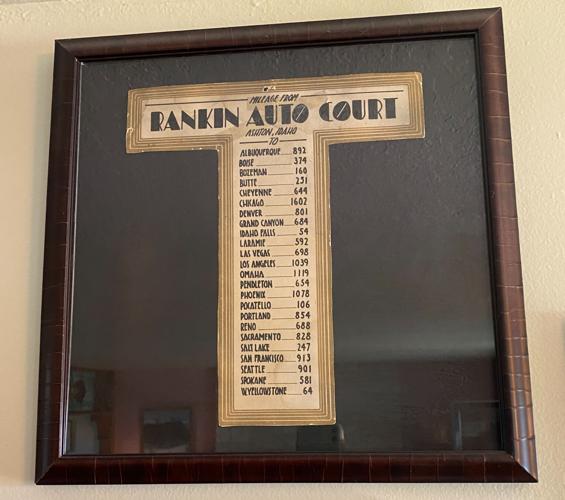
It is at this stage that the story of the Rankin Auto Court begins.
According to the Rankin Motel’s application to the National Register of Historic Places, in 1920, Kenny and Hugh Rankin set aside a portion of their farm and began construction of the auto court, starting with a U-shaped driveway, three one-room cabins and a communal washhouse.
The Rankin Auto Court, which eventually became the Rankin Motel, opened to the public in 1924, and throughout its nearly century-long history it has been run by the Rankin family and their descendants.
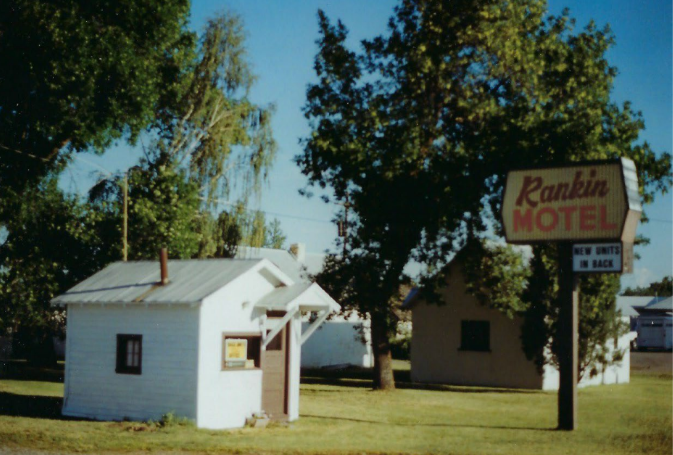
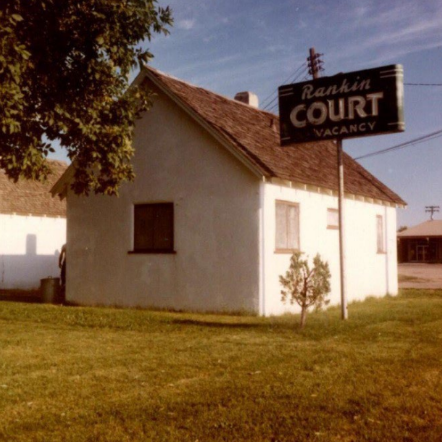
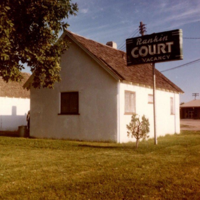
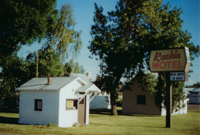
Rankin Auto Court from U.S. Highway 20 showing office cabin and a previous sign, 2000.
***
On a gorgeous afternoon in early June, sisters Jenny Groom and Kim Grover-Haskin — the current proprietors of the Rankin Motel — agreed to meet for an interview at their historic establishment just outside of Ashton’s city limits on the south end of town.
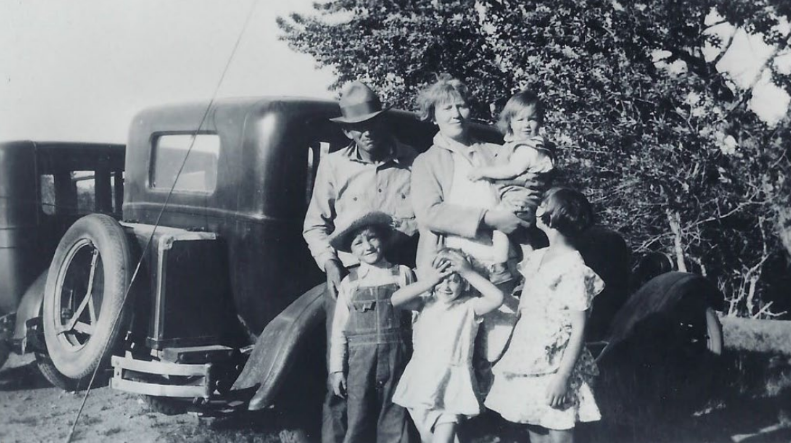
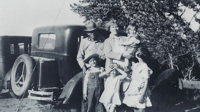
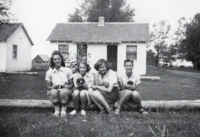
Kenny and Eva Rankin and their family, 1931.
The property is easy to miss, hiding among a grove of old deciduous and evergreen trees. Once among the trees, however, it’s easy to feel right at home. There are gardens everywhere — all of which have been lovingly tended and some of which have plants that have been around for many years. The motel and its surroundings represent an oasis that is a jarring juxtaposition against the heavy traffic passing by on the adjacent U.S. Highway 20.
More than a dozen buildings mark the motel's landscape, representing architecture styles from the 1920s through the mid-’70s.
At the motel office, a ranch house built in 1966, two dogs — a small one named Connie and a larger one named Kerosene — are waiting to greet people at the door. Inside, there is a wall of historical photographs from throughout the decades. There’s even more history overtaking the kitchen table: newspaper clippings, photos and books.
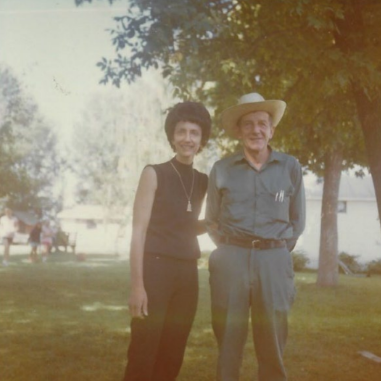
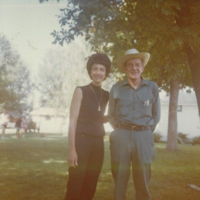
Betty and Byron Grover, 1967
Groom and Grover-Haskin are the third generation of their family to be running the motel. Their grandparents, Kenny Rankin and his wife, Eva, oversaw the business for four decades until their daughter Betty and her husband, Byron Grover, purchased it in 1967. The next generation is helping out as well. Groom says her son plays a big role, and he has two kids.
***
Ashton — a town that’s now home to about 1,000 people — is located only 55 miles from the West Entrance of Yellowstone National Park, and the Rankin brothers hoped to cash in on the growing number of tourists making their way to the park, according to the information submitted to the National Register, which was written by Grover-Haskin. The park first allowed automobiles to enter in 1915, and the Rankin Auto Court was one of the first accommodations in the region catering to car travelers.
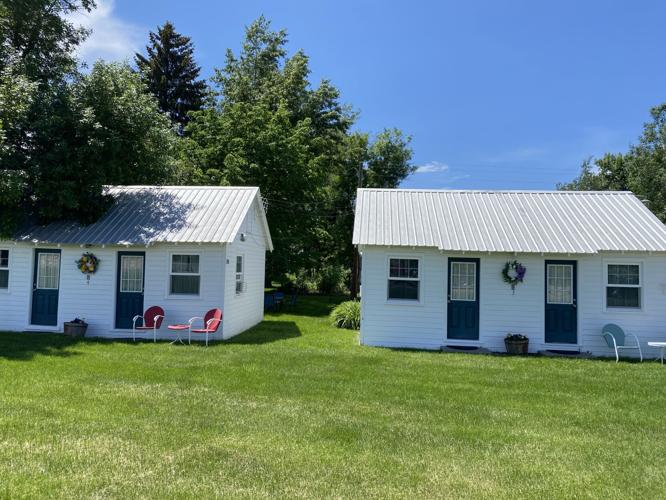
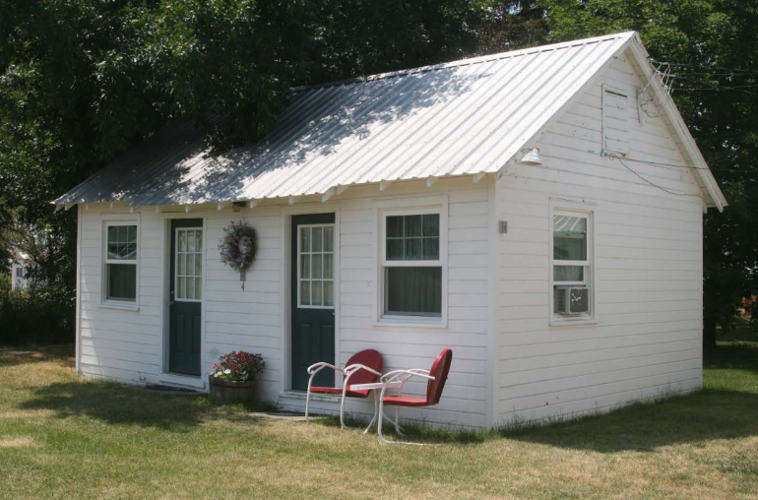
The Rankin Motel's original one-room cabins — which didn’t have foundations, allowing them to be moved around — are still on the property and are largely used for storage these days. Their successors — three nearly identical double-unit cottages built between 1928 and 1930 — are still available to rent today.

These cottages at the Rankin Motel were built in the late 1920s.
The cottages at the Rankin were keeping up with a national trend. Tourists wanted more and more amenities, and motel owners were inclined to oblige. This era is when everything really changed.
“Still more popular were slightly more elaborate units that, at one dollar a night, furnished a simple iron bed with a straw-stuffed mattress, a few benches, a table, a water pitcher and bowl, and perhaps a coin-operated gas plate,” Belasco writes in his book. “Resort area camps had long rented such cabins to summer vacationists staying for a week or more, but after 1925 the idea caught on at (auto) camps. Despite their Spartan furnishings, these cabins often filled up before dark. This was a real breakthrough, marking the end of autocamping and the beginning of the motel industry.”
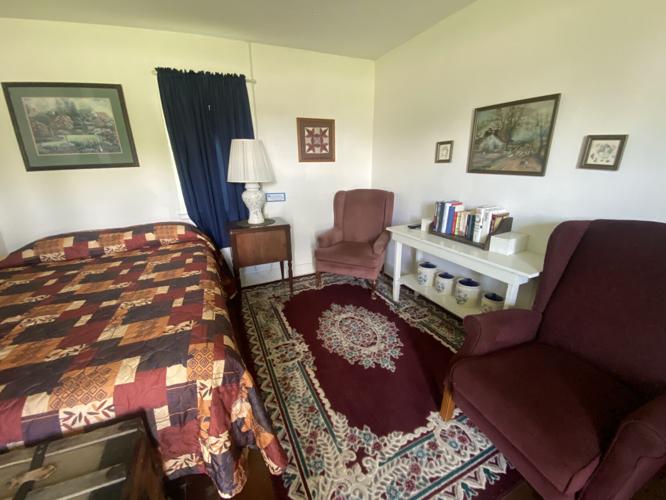
The original double-unit cottages at the Rankin have since been converted into single units and their bathrooms were recently renovated, but otherwise their historic integrity is intact. The nostalgic scent in each room is sure to trigger memories of days past, and the decor evokes feelings of being in Grandma’s house. In each cottage, there is a blessing next to the door that reads, in part, “May this suite and motel be your second home. May those you love be near you in thoughts and dreams. Even though we may not get to know you, we hope that you will be comfortable and happy as if you were in your own house.”

Pictured is the inside of one of the cottages available to rent at the Rankin Motel.
In the 1940s, the Rankin family stepped up their game even more and added two larger stucco cottages, featuring two bedrooms, a bathroom, living room, dining nook and kitchenette. The cottage phase of the motel ended around 1960 when the final of the smaller cottages was built. The last one is a single-unit building that Grover-Haskin fondly calls the honeymoon cottage because she spent her honeymoon there. That cottage is also available to rent.
Around this same period, the Rankins also opened up a store and gas pumps adjacent to the motel. There is a store there now called Dave's Jubilee where the Rankins' store once stood.

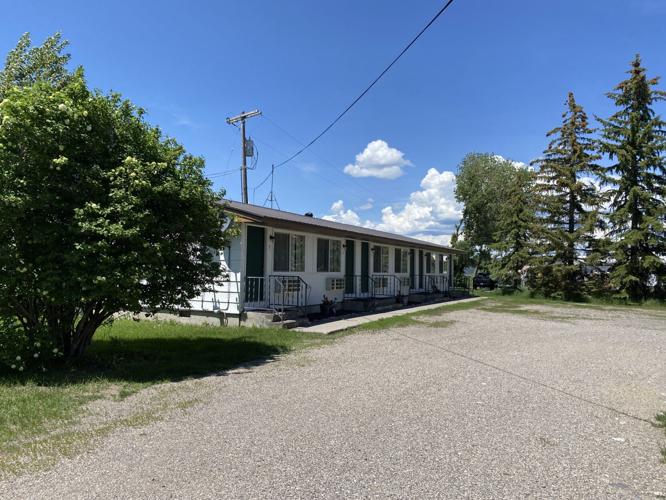
The motor court at the Rankin Motel opened in 1973.
The final evolution of the motel was in 1973 with the addition of the six-unit motor court.
“The Rankin Auto Court's development between 1920 and 1973 exemplifies the architectural evolution of roadside hostelries from the cabin camp to the cottage court to the motor court,” Grover-Haskin wrote in the application.
The Rankin Motel was officially added to the National Register of Historic Places last year.
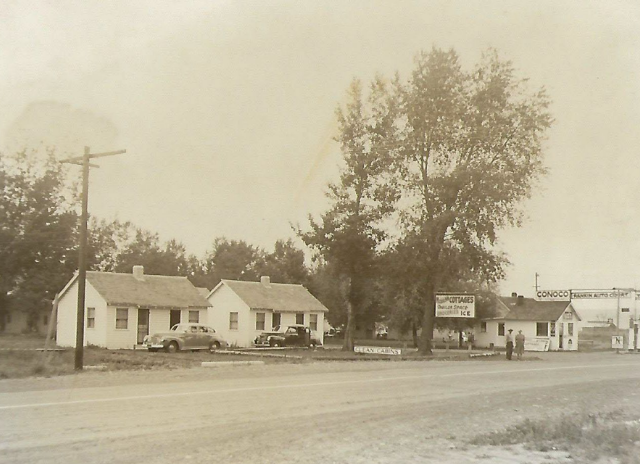
Rankin Auto Court from U.S. Highway 20, 1940s.
***
At the time of this interview, the Rankin Motel’s 2023 season had been off to a slow start. That’s in part thanks to an especially snowy winter that forced them to open later than usual.
“Every year is a little different,” Grover-Haskin said. “Of course last year, we started out good, but then they had flooding up in (Yellowstone) park. And so even though they closed up the North Entrance, the whole park was affected. This year is a little different, too. It seems to be a little slower. Usually June and July it’ll pick up, but I think last August was quiet, so we just kind of roll with the changes.”
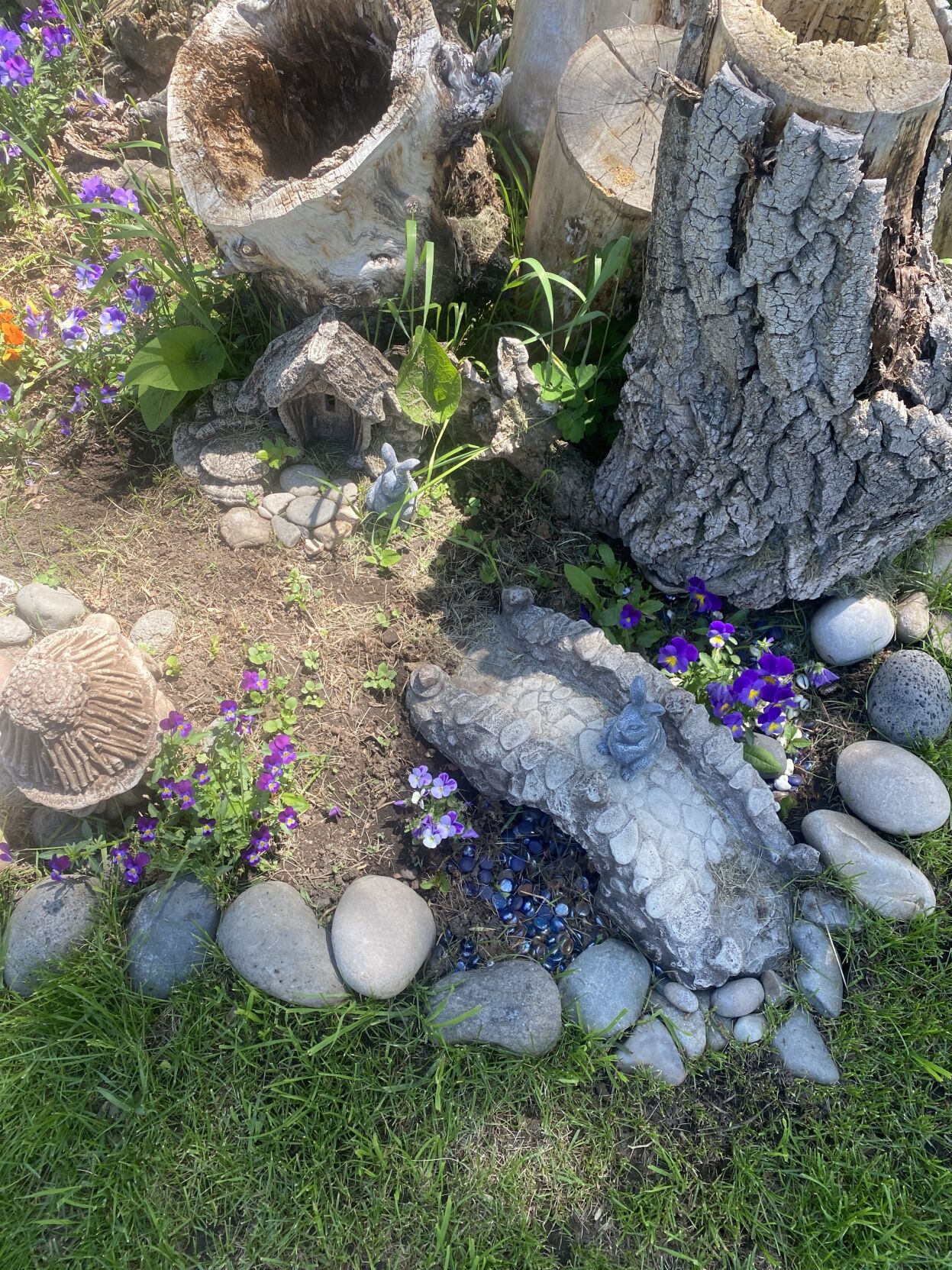
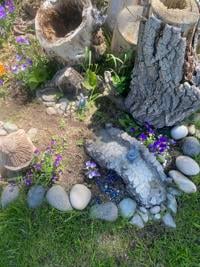
On the grounds of the Rankin Motel, you can find some hidden gems such as Bunny Hollow, pictured here.
Groom added with a laugh, “That means I have more time to work on flowers.”
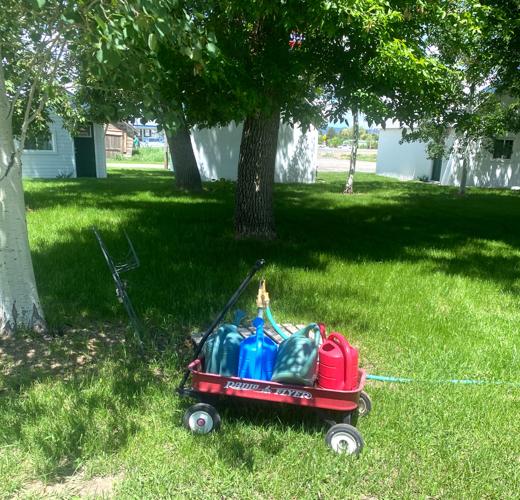
Taking care of the flowers here is a task she takes seriously — and joyfully. She has a classic red Radio Flyer wagon — aptly nicknamed the “water wagon” — filled with four large watering cans. Each evening, she fills the cans and walks around, dutifully watering all the plants.
“I love the way (the flowers) look,” Groom said. “And I think it's therapeutic.”
Some of the plants — such as the huge rhubarb plant next to the house and the irises that greet guests as they pull into the motel’s driveway — were inherited from “Uncle Dave.” David Rankin, the last surviving child of Kenny and Eva Rankin, died on March 4.
There’s so much family history deeply embedded in everything here — even in the ground.
“It's hard to know where to start to write something about this place,” Groom said.
The sisters grew up in the house that is now the motel’s office. Grover-Haskin now lives in Texas and helps out with the business remotely but was in Ashton at the time of this interview.
The flowers aren’t the only cozy touch Groom has put on the place. Every window in each of the cabins has been dressed with unique curtains that she sewed herself — each window a different pattern.

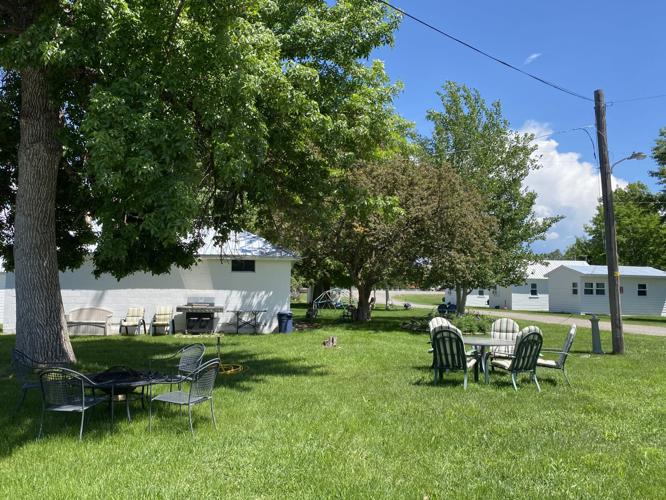
The Rankin Motel has a communal grill for cooking, as well as plenty of outdoor seating and a fire pit.
“Jenny loves to just make these rooms so unique,” Grover-Haskin said.
Additional amenities at the motel include plenty of outdoor seating, a communal grill for cooking, as well as a fire pit for hanging around. The motel is also dog friendly.
In the near future, the sisters plan on renovating the bathrooms in the motor court — which they endearingly always call "the new units,” Grover-Haskin said with a laugh — as well as cleaning up the two larger cottages so they can be rented again.
When asked what makes the motel so special, Groom said, “We know what hospitality is. That's what we grew up in. That’s all we know how to do.”
The Rankin Motel, located at 120 S. U.S. Highway 20 in Fremont County, is generally open from April through November every year, depending on weather. In addition to the motel and the cottages, there is also a farmhouse on the lot next door that’s available to rent. To book a room and find more information, visit rankinmotel.com or call 208-652-3570.
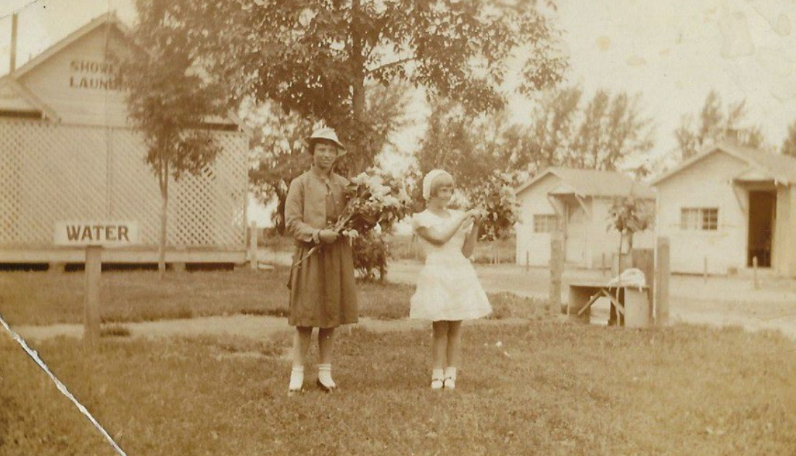
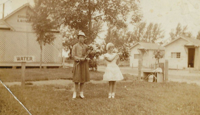
First washhouse building at the Rankin Auto Court, circa 1935.

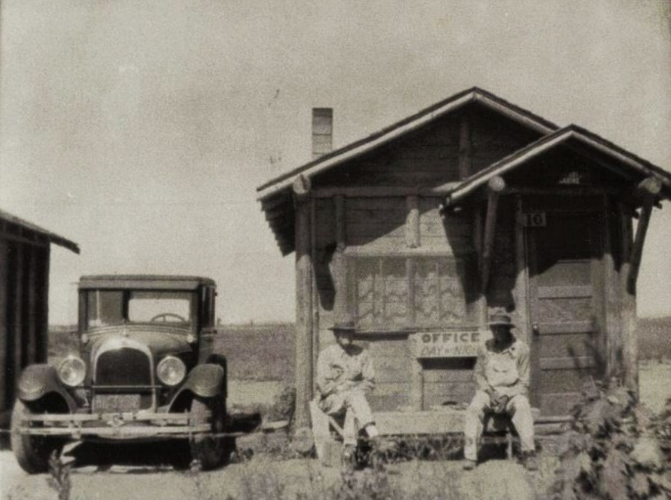
Rankin Auto Court office, circa 1925.
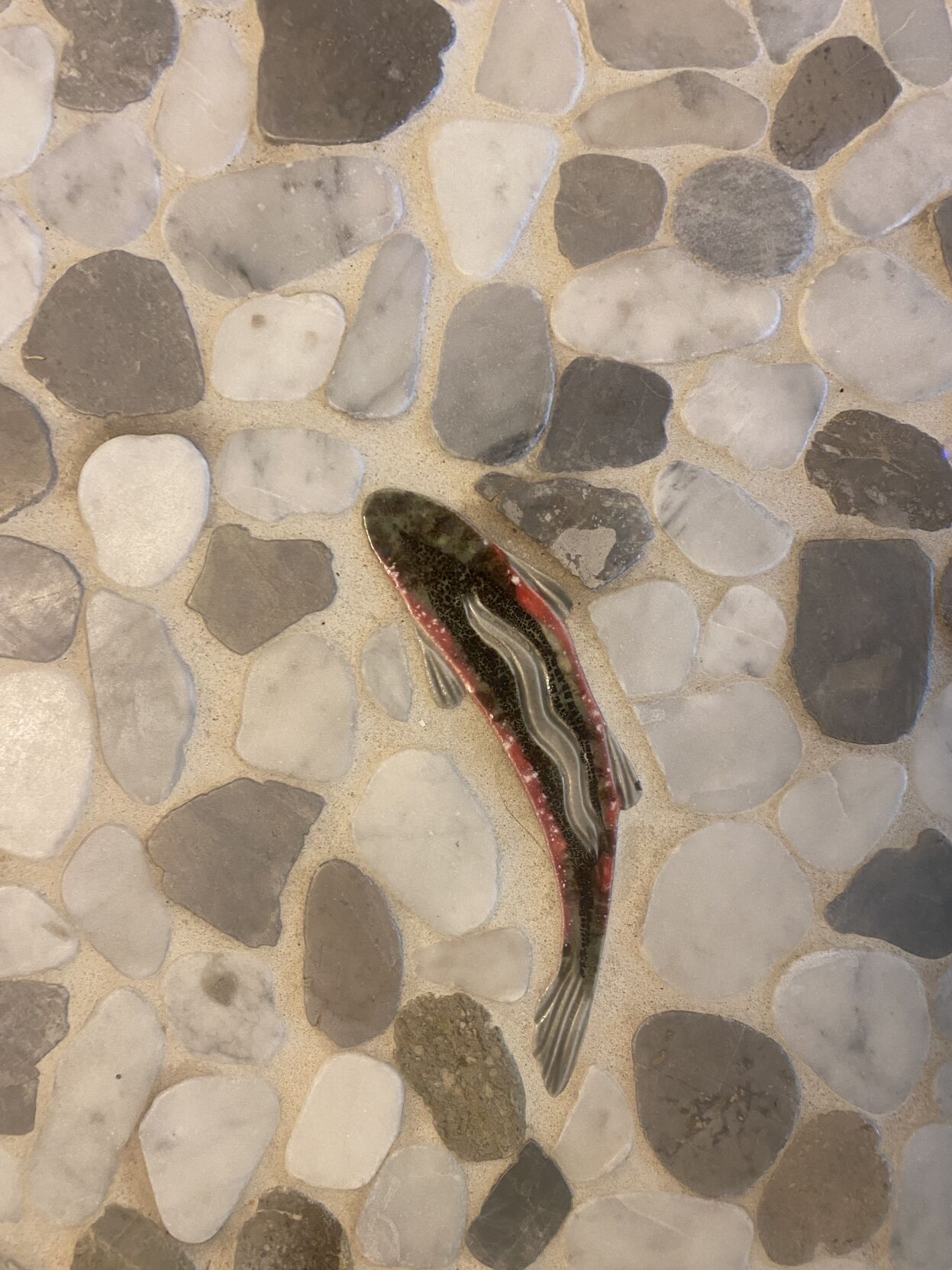
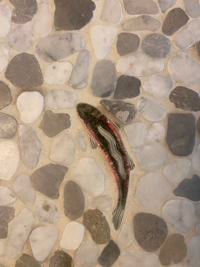
Inside one of the units in the motor court at the Rankin Motel, sisters Jenny Groom and Kim Grover-Haskin installed what they call the fish floor.

(0) comments
Welcome to the discussion.
Log In