



Now that the pandemic has returned and many are quarantined in their houses, perhaps the sale of books and e-books will soar. Of special interest is England’s greatest popular and literary writer, second only to Shakespeare, Charles Dickens. I would suggest a reread of “Great Expectations,” “Our Mutual Friend” or the very modern “Bleak House.”
For something provocative, Charles Dickens’ private life has come under scrutiny with new evidence after decades of secrecy. Claire Tomalin’s book, “The Invisible Woman: The Story of Charles Dickens and Nelly Ternan,” concerns Nelly Ternan, an actress from a theater family who became the mistress of Dickens. Tomalin shows how 19th century women in theater actually had a certain freedom since they were considered of dubious reputation. Nelly was no exception.
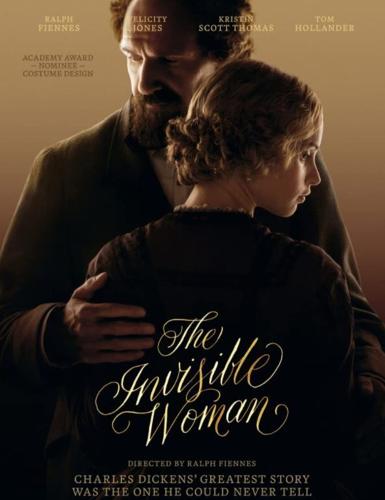
In Jane Smiley’s accessible biography, “Charles Dickens,” she discusses the clandestine relationship but insists there is no proof it was consummated. Tomalin insists that it was and that their affair may have produced a male child who died early. It is amazing that Dickens, a very famous and public man, was able to hide his relationship with the much younger Nelly. She was the least talented actress of her family, including her mother and two sisters, but she was good enough to act with Dickens in a play and eventually became his companion. (There is also a film, “The Invisible Woman,” with Ralph Fiennes and Felicity Jones.)
Charles Dickens was a man with a driving passion, not only for literature but for theater and travel. His schedule could exhaust younger, healthier men. Dickens was a beloved celebrity in his time, but Claire Tomalin reveals that the private Dickens was cruel to his ex-wife, Catherine, who bore him 10 children. On one occasion when Catherine received a piece of jewelry meant for Nelly, he asked Catherine to personally give it to Nelly. After their separation, Dickens took custody of the children, though he provided money for Catherine.
Claire Tomalin’s biography is well researched with a slightly gossipy feel at times. Her book is not totally objective but works well as a scholarly detective story.
After a strenuous tour with Dickens giving dramatic readings, he died of a stroke on June 9, 1870, and there are two accounts of what happened. In one version, he was with Nelly when he collapsed and she put his body in a carriage, delivering Dickens to his home. In another version, he died at his home in the presence of his daughter. Dickens’ sister-in-law, Georgina, took care of business and protected the Dickens name for the rest of her life. She also remained close to Nelly and kept her relationship with Dickens hidden.
Nelly eventually married and had two children, a son and a daughter, but never mentioned Charles Dickens to her children. When Nelly died in her 70s, few people knew of her relationship with Charles Dickens. Through a pocket diary kept by Charles Dickens that was presumed lost but found 50 years after his death and testimony from people who knew of the affair, the truth emerged. It proved shocking and painful to Nelly’s children, particularly her son, Geoffrey, who had survived as a soldier fighting in World War I. He inherited his mother’s papers that contained playbills of her life as an actress. Unfortunately, all of her letters to and from Dickens were burned. Henry Dickens, the last surviving son of Charles Dickens, confirmed to Geoffrey that the affair was true.
If Charles Dickens was not unlike other modern celebrities who have scandals, his massive literary output will continue to endure. The biography by Claire Tomalin will provide more insight into the darker side of this Victorian genius.
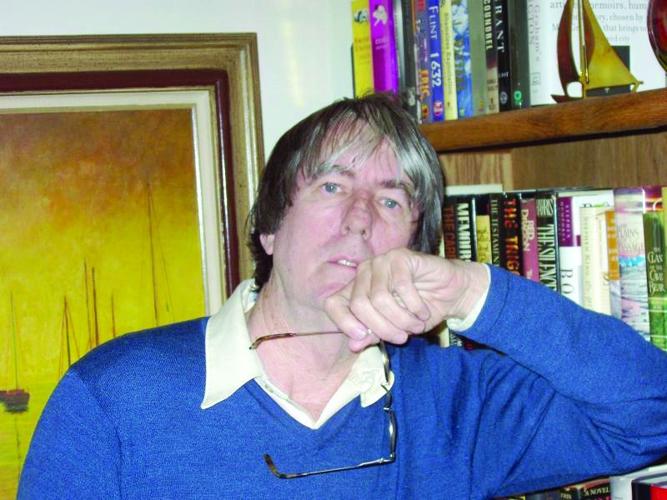
Michael Corrigan graduated from San Francisco State with a Master of Arts degree in English and creative writing. He was active in theater and attended the American Film Institute. He retired from Idaho State University as an instructor of English and speech communications. He has written several books, including “Confessions of a Shanty Irishman,” “Mulligan” and “These Precious Hours.” NPR broadcast his play for two readers: “Letters from Rebecca.”

(0) comments
Welcome to the discussion.
Log In