

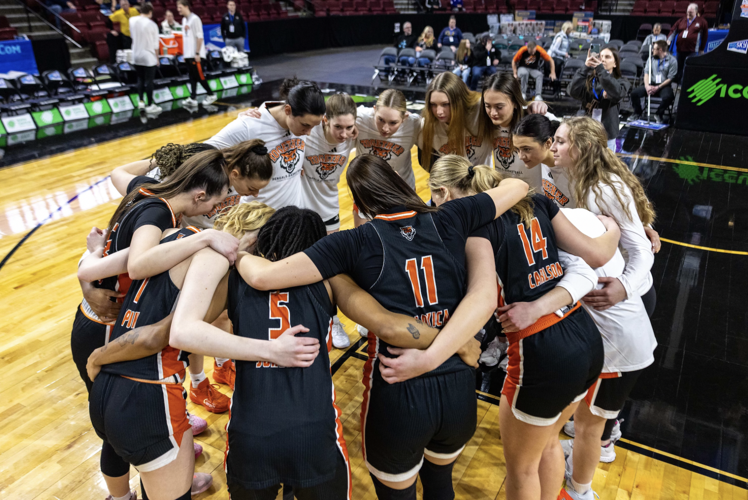

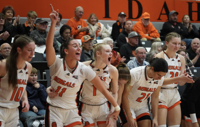
The Idaho State women’s basketball season ended with a 75-42 loss to eventual Big Sky Conference Tournament champion Montana State last Tuesday in Boise.
No shame in that as the Bobcats have been a juggernaut all year. Head coach Trisha Binford put together her finest team in 20 seasons in Bozeman and one of the best clubs in league history. It’s certainly the best since Idaho State won it in 2021.
The Bengals finished the year 14-17 and 9-11 against teams in the Big Sky. That was disappointing as it marked the program’s third straight losing campaign overall and in Big Sky play.
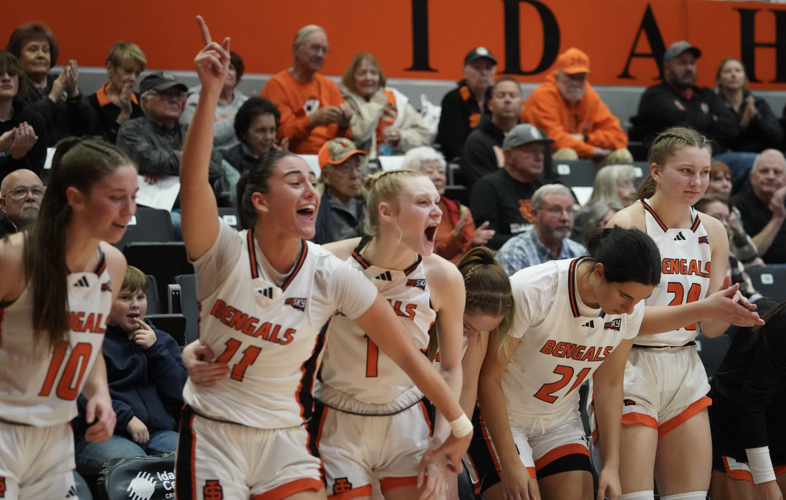
But the way they finished the year gives cause for optimism. They won six of their last nine, were the No. 5 seed in the conference tournament and beat Weber State in the quarterfinals 62-42 for its postseason win in four years. As a person told me in Boise, “Until the last month, we thought they were going to finish ninth or 10th.”
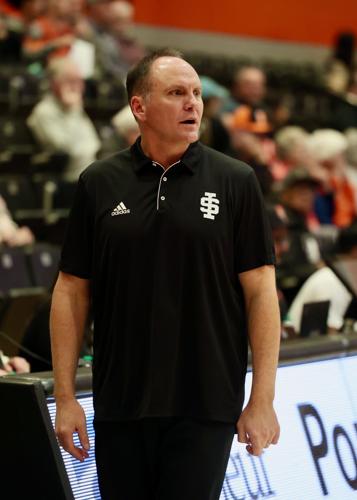
ISU head coach Seton Sobolewski just finished his 17th season at the helm. He’s won three Big Sky titles, made two trips to the NCAA Tournament and four to the WNIT Tournament and as he told me one time, “We don’t practice or play for second place.” So you can be sure he and his staff will do a deep dive into all aspects of the program in order to try to bring it back to elite status, which is where they have resided for most of his tenure.
What could they be looking at? Here are some possibilities:
HEALTH
While it wasn’t as devastating as the previous two seasons which saw the Bengals so decimated they only had seven available players by the time they got to Boise in March, they still didn’t escape the injury bug for a third consecutive year.
Just look at the list, Tasia Jordan missed the first two weeks of the season working her way back from last year’s knee injury. Ruby Spitzeck missed the first eight games because of a hand surgery after breaking a finger in practice. Nike Lokica missed nine games after playing BYU with a quad injury. Mackenzie Marenchin was unavailable for most of the fall semester. Halle Wright suffered a knee injury in the first minute of the Northern Arizona game in early January and sat out the next six contests. She returned playing with a brace on the knee, but fell twice in games and had to be helped off the court each time. She was shut down for the year and only played in 18 games − 11 when healthy. And Aurora Elder missed four games before returning late in the year, then missed the final regular season game and the Big Sky Tournament when it was discovered she had broke her hand at some point.
The injury situation even impacted the coaching staff as assistant coach Dora Golas dislocated her ankle participating in scout team practice before the Northern Colorado game in Greeley in February.
Seton told Brad Bugger of the Idaho State Journal that he made adjustments to the offseason and in-season conditioning programs and they did help. He may try to make more adjustments to see if next season can see injuries reduced even more. It’s hard to win if your best players are on the sidelines.
HEIGHT/PHYSICALITY
No one can ever accuse ISU of not playing hard. Regardless of the score, they give all out effort. Sobolewski wouldn’t have it any other way. But the Bengals were one of the shortest and less powerful teams in the league for the past few seasons. It is hard and it takes a toll when night after night you are giving up several inches or a lot of weight to players on the other team.
Former ISU great Ash Vella was in town and watched the Montana State game at Reed Gym on Feb. 15. When she saw the Bobcats come out of the locker room, she told me she couldn’t believe how big they were. MSU had 11 players listed on the roster at 6-foot or taller and many of them were powerfully built. Another example was Weber State’s front line of Taylor Smith, Antoniette Nnopu and Rose Bubakar. In the first meeting this year with ISU, they went for 45 points as they overpowered the Bengals in the paint. Montana was a big team across the board and even Idaho had guards that looked much bigger than ISU’s players.
Many times Sobolewski has to tell his team to double or even triple team other teams inside players because of the size difference. ISU does a terrific job of that, but when you do that you give up something. In this case, being able to guard on the perimeter. It is just so hard to get back outside to cover the 3-point shot. Opponents took 239 more 3-balls than the Bengals this year. They made 77 more of them. That’s 231 more points from beyond the arc, which averages out to almost 7.5 per game. The Bengals averaged 62 points this season, a seven-point improvement over last year, as Sobolewski went back to his motion-offense instead of a low post one. But starting off basically in the hole for 7.5 points, makes a difference. Being able to single guard more on the inside could help.
Having size and strength doesn’t automatically equate to wins, but in basketball it does help − a lot.
Depending on the roster construction, Sobolewski and his staff may be looking for more size, more strength and even more experienced players if they become available. As he told me, comparing his junior class to Montana State’s juniors, because of injuries, the ISU players simply weren’t able to play in as many games as MSU’s players and that makes a difference.
TALENT
It doesn’t matter what level you’re at, from the NBA down to smaller DI conferences, even in DII or DIII, you have to have the talent to win. Who can you call a play for with the game on the line? Who has the confidence to say, “Give me the ball, this game is over.”
Talent wins.
Sobolewski has had that during his career. Who can forget players like Kaela Oakes, Chelsea Pickering, Ash Vella, Lindsey Reed, Grace Kenyon, Brooke Blair, Estefie Ors or Dora Goles? They were gamewreckers, players opposing teams had to account for and even then, it often didn’t matter as they would find ways to win anyway.
Sobolewski may have that right now in Tasia Jordan, a player who has shown flashes of brilliance. Her athletic ability may be the best in the league, but because of a knee injury, she hasn’t had as much playing time as she and Sobolewski would have liked. She came from the junior college ranks and missing half of last year slowed her development. She does have that potential though.
As do some of her teammates. Piper Carlson, Halle Wright and Kasey Spink can play for most of the other teams in the league, but the wild card today is the transfer portal, which opens at the end of the month.
It is almost impossible to think that everyone on your roster is returning. Fourteen players on the ISU roster have eligibility remaining. If they all were to return, the program would only have a single scholarship available to add talent, provide depth and perhaps height and strength. Remember Molly Hays sat out this season recovering from an ACL injury suffered in her senior year of high school.
But Sobolewski won’t know exactly what he has or what he needs until the portal opens in March and closes in April. From there, he and his staff can focus on what they think they have to get.
Despite the past few seasons, which haven’t been up to the standards set by the program for over a decade, there’s no reason why they can’t get back to elite status with some tweaks on offense and defense, some additional talent, and some good luck health-wise.
It will be an interesting offseason for the program to be sure.


(0) comments
Welcome to the discussion.
Log In