



Estefi Ors panicked. She didn’t know what to say, and even if she did, she spoke so little English that a language barrier prevented her from voicing it. So on this summer afternoon in 2016, she sat in front of a laptop in her home in Valencia, Spain, using Skype to chat with Idaho State’s coaching staff, which had just asked her a question she — quite literally — didn’t know how to answer.
Would you like to commit?
“And I didn’t know how to say no,” Ors said, “so I said, ‘sure.’ They’re like, you know you just committed, right? And I’m like, sure, yeah.”
When Ors told her mother what she had done, that she was pretty sure she had just committed to Idaho State, she received a startled response. The two phoned a friend of the Bengals’ coaches, who had assured them that everything was fine, that Ors was headed to a good school and a better basketball program. Ors still felt a little nervous, but that conversation soothed her a tad.
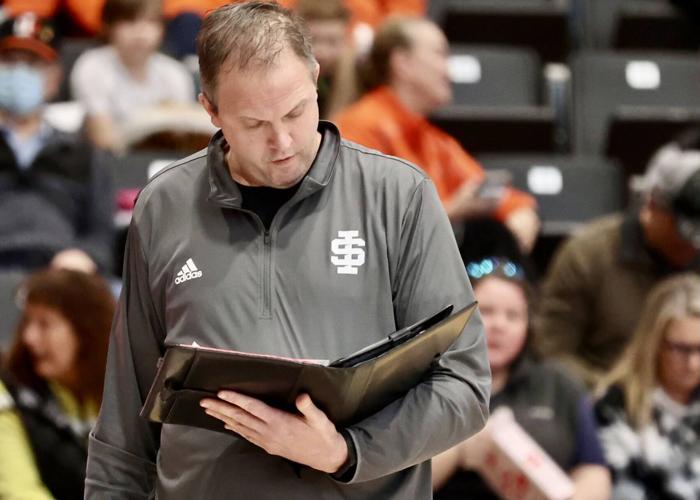
Weeks later, when ISU assistant Ryan Johnson visited Ors in Valencia, she felt her doubt vanish like a magic trick. Johnson seemed to know everything Ors needed to do to move to Pocatello: Fill out this form, do that paperwork, take this test, travel to that embassy. Johnson and Ors hung out together. He watched one of her games. But Johnson helped Ors most — and, by extension, Idaho State — by giving her a step-by-step blueprint on how to become eligible to play for the Bengals.
“It was a really long process, but Coach Ryan is the best,” Ors said. “He knows everything.”
Get to know Johnson and you realize this is his specialty. Since he joined Idaho State’s staff seven years ago, he’s used an array of international recruiting connections to land players like Ors, foreign prospects who slipped through the fingers of schools across the world. Johnson’s footprint is caked across this year’s team — the Bengals roster four Australian natives, a Croatian player and a speedy French point guard — and on clubs of old, which featured New Zealand natives who made all-conference teams and others who became defensive players of the year.
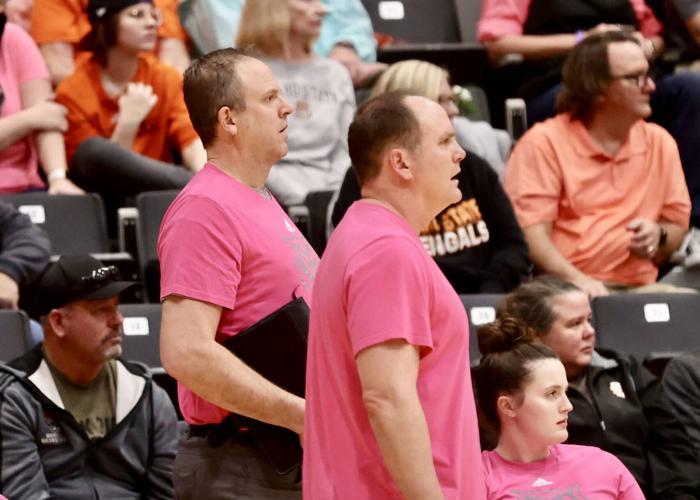
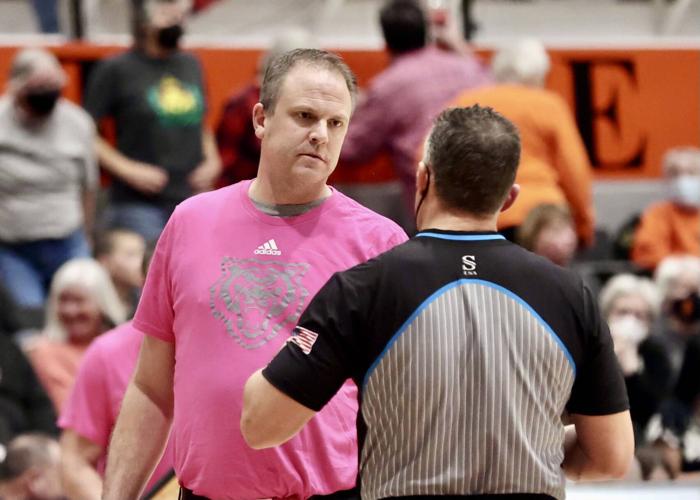
Johnson, a 6-foot-7 giant of a man, smiles meekly when he chats about the connections that have led him to these players. He doesn’t like bragging about himself, doesn’t want to get into the details. But it’s clear Johnson isn’t just recruiting any international players. He’s landing ones who make differences, versatile athletes who helped Idaho State capture the conference crown last season and repeat this year. It’s one thing for Johnson to develop relationships with overseas coaches who connect him with players. It’s another for him to train his eye to identify the ones who will make splashes in Pocatello.
“It’s kind of an untapped market,” Johnson says.
His track record speaks for itself. Senior guard Callie Bourne, who hails from Australia, has become a key cog in the last three years, helping ISU win two conference titles and advance to last season’s NCAA Tournament. Ors, the program’s all-time leader in 3-pointers, has earned all-conference honors four years in a row. Head coach Seton Sobolewski led the charge in recruiting French guard Diaba Konate, but she also made last season’s all-conference second team. That’s also to say nothing of Croatian native Dora Goles — she went to a Wyoming junior college first — who earned a spot on the Big Sky first team last year.
That’s a long-winded way of expressing the obvious: Johnson has mastered overseas recruiting in ways few mid-major coaches have.
“Coach Ryan is one of the smartest people I’ve ever met. Somehow he knows the answers to literally everything,” Goles said. “You ask him, like, what’s the free throw percentage of a bench player who played five years ago, and he’ll know it. He knows all the little things. He helps all the international people with immigration stuff, international taxes, whatever. He’s just such an important figure for us international people.”
“It’s crazy to think that he knows everything from what I need Australia-wise to get over to America,” Bourne added, “what a Spanish girl needs, what a Croatian girl needs, what a French girl needs, Colombian. He shows how much time and effort he puts into knowing what we all need to be able to succeed and be eligible to play here at Idaho State.”
It’s a nice story, but it begs the question: How on earth does Johnson know people in all these foreign countries?
Johnson grinned.
“Over a long time,” he says.
***
In his younger days, Johnson always enjoyed exploring when he and his family took trips — “I was the wanderer,” he says — but his international curiosity didn’t start paying off in earnest until roughly a decade ago. As an assistant at Northern Colorado, in 2012, he took a US all-star team to China to compete against a few countries’ national teams.
There, the Americans competed against clubs from China and Australia, Brazil and Denmark, even squads from Lithuania, New Zealand and Poland. Johnson calls it “a fun little side thing to do,” but on the trip, he developed strong relationships with those teams’ coaches. Some of his first overseas contacts date as early as 2008, but for Johnson, this was his chance to establish friendships with coaches who would eventually lead him to players who made differences at Idaho State.
Here is where we run into another barrier: competitive advantages. Johnson doesn’t want to disclose the identities of these coaches, lest other teams try to invade the market Johnson has cornered, so to explain how he builds these relationships, he speaks in vague terms: An Australian WNBL coach. A skipper in Spain. A coach in France who mentored Konate. Johnson didn’t spend years getting to know these coaches just to have their names spoiled in a newspaper story (which is fair) so he kept things obscure for these purposes.
Still, Johnson said, getting to know the right coaches is a challenge in its own right. It’s a little like getting an offer on a nice car on Craigslist: Sounds great, but how do you know the salesman is telling the truth about his product?
“Especially developing contacts where you trust them, they trust you,” Johnson said. “That’s one of the biggest things for the whole thing — knowing that you’re working with somebody that knows those kids, and also has an idea of some of the playing levels here from experience.”
That’s the other part of the calculus: Johnson has to find players who fit the niche at Idaho State. The Bengals may be a mid-major team, sure, but they’re also one of the best at this level. They aren’t competing for the same players as Utah, for example, but they’ve established a tradition — and a style of play — that makes them the premier program in the Big Sky.
So the truth is that Idaho State isn’t for everyone. Few Bengals ever lead the conference in scoring. Nobody comes to ISU for the flash, for the name recognition. Sobolewski has built such a successful program because his teams play in ways that other Big Sky teams don’t: Tons of off-ball screens. Cuts into the lane. Defend like hell. Passing, passing and more passing. It sounds cliche, but the Bengals win because they emphasize the team game, overwhelming opponents with a whirlwind of passes and cuts and screens until they succumb to confusion.
“My brain constantly burns. I have to remember the plays,” Konate said. “There’s so many plays. Also on defense, there’s a lot of things to remember — going under the screen, going over, remembering the scout on other players, knowing I have to go over the screen when there’s a good shooter.”
“You’re looking for the best possible players that also fit your system, your culture,” Johnson added. “If there was somebody who, all they were worried about was, how many shots are you gonna get me, coach? I don’t know if that person is gonna fit with what we do. That’s something that distinctly comes into play with the kids we’re recruiting.”
That’s where Johnson’s genius becomes most effective. He’s gotten to know overseas coaches well enough that both know what the other is looking for. The leaders Johnson knows in Australia, for instance, understand the difference between Idaho State and Stanford. They also know Idaho State likes to scour foreign countries for players. So when the ones who fit the bill come along, those coaches reach out to Sobolewski and Johnson, recommending players they think could fit in with the Bengals.
Then the ISU coaches have to pore over the tape. “You go through a lot of players who aren’t good enough,” Sobolewski said. “You see a lot of film on kids who aren’t good enough until you finally get to the ones who are good.” That’s how Johnson tracked down Ors, but sometimes overseas coaches take the initiative. Sobolewski’s friend in France, the one who passed along Konate’s name, did so because they recognized ISU’s resume with international players.
“Sometimes those pop up too, where things kinda build themselves,” Johnson said.
Mostly, though, Johnson recruits overseas players the way he does American ones: By evaluating tape. Once Sobolewski gives Johnson the green light to start pursuing a player, he dives in.
“You check them out, see if their athleticism is there,” Johnson said. “‘Some of those things she’s doing, it looks like she’s got some pretty good skill.’ Or she’s got a good sense of ball-handling or passing or shooting or whatever. Then you go, OK, now I need to watch more of the full-length games.”
***
The international imprint on this Idaho State team might be visible from Jupiter. This last Christmas, for example, the Bengals held a team dinner, where they chatted about how differently they grew up celebrating similar holidays. When she moved from Spain, Ors had to adjust from eating five meals a day to three. Even during practices, sometimes the players will scrimmage international players against American ones.
That’s when Sobolewski likes to hook his phone up to Reed Gym’s auxiliary cord and play strictly American music, pretending to root against the foreign players. “When he’s the one recruiting us,” Goles laughed.
“He’s a very funny guy,” Goles added, referencing Johnson. “I think Estefi described him perfectly, as a teddy bear. He’s a very, very nice, genuine guy that looks out for us. He’s like a dad for us.”
So for Johnson and the team, the part that ties it all together — the part that makes the entire thing possible — is that the international players he’s brought together genuinely like each other. They understand cultures they wouldn’t otherwise, customs they’ve never heard of. Johnson isn’t fluent in every language where he has recruiting connections, but he knows how to communicate with the players there, so when you zoom out far enough, you realize he’s changed the entire trajectory of Idaho State’s program.
“I think it brings a whole other dimension to the team. It brings us closer together,” Goles said. “You learn so many different things about different cultures, different people, different backgrounds. Knowing people from all over the world is just special.”



(0) comments
Welcome to the discussion.
Log In