
The world's biggest supplier of telecommunications network gear faces a criminal trial in New York. Jury selection is scheduled to start Tuesday in the U.S. case against China’s Huawei Technologies. The company has been charged by U.S. authorities with stealing technology and trade secrets. U.S. prosecutors also claim it installed surveillance equipment that enabled Iran to spy on protesters and violated U.S. sanctions on North Korea. Huawei denies the allegations. Chinese officials say the U.S. government has engaged in “economic bullying” and has improperly used national security as a pretext for “oppressing Chinese companies.”

Across the country and up and down the ballot, candidates from both parties are increasingly on the attack over Flock cameras. The AI-powered nationwide network records license plate data and other characteristics of all passing vehicles, allowing law enforcement agencies across the country to search and share that data. The company has faced mounting public backlash that has now become a 2026 campaign theme. Candidates across the political spectrum are talking about bans, limits and funding cuts. The company says it provides an important crime-fighting tool. Critics say their pervasiveness amounts to unconstitutional warrantless mass surveillance.

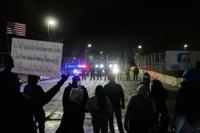
Advocates are speaking against a sweeping undercover federal surveillance operation that court documents say targeted progressive groups and unions protesting the Minneapolis immigration crackdown. The documents were filed Thursday in a case involving 15 people charged with impeding the crackdown. The government said its Operation Puppet Master surveillance program was aimed at a network of conspirators. Government documents revealed in court motions say that the reality was Department of Homeland Security officers infiltrating meetings in churches, schools and parks that were often simply discussions of constitutionally protected protests. Groups say the government was trying to intimidate them.
WASHINGTON (AP) — The White House on Monday defended the shootdowns of three unidentified objects in as many days even as it acknowledged that…
WASHINGTON (AP) — The Pentagon said at midday Friday that a Chinese spy balloon had moved eastward and was over the central United States, and…

WASHINGTON (AP) — House Republicans on Friday released a bitterly disputed, formerly highly classified memo that they say shows surveillance a…