

BOISE — Despite her diminutive name, she’s the most formidable female in Idaho, hands down.
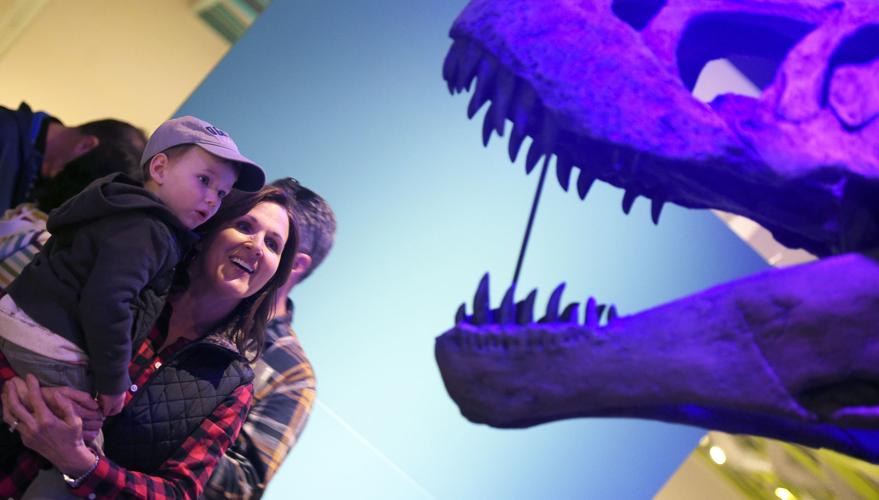
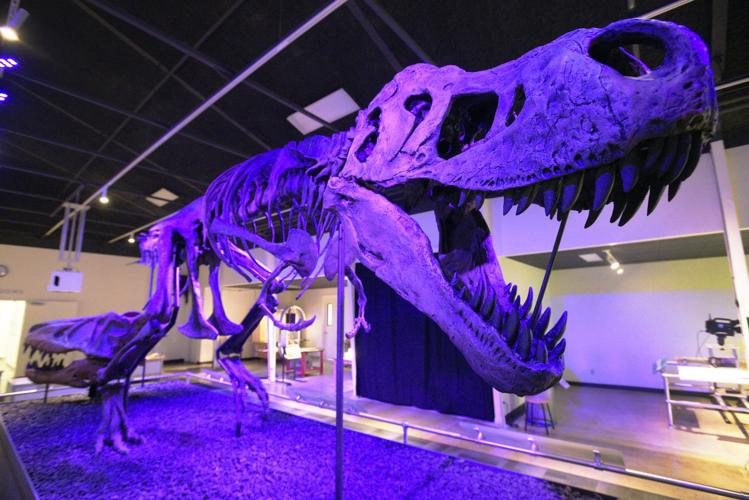
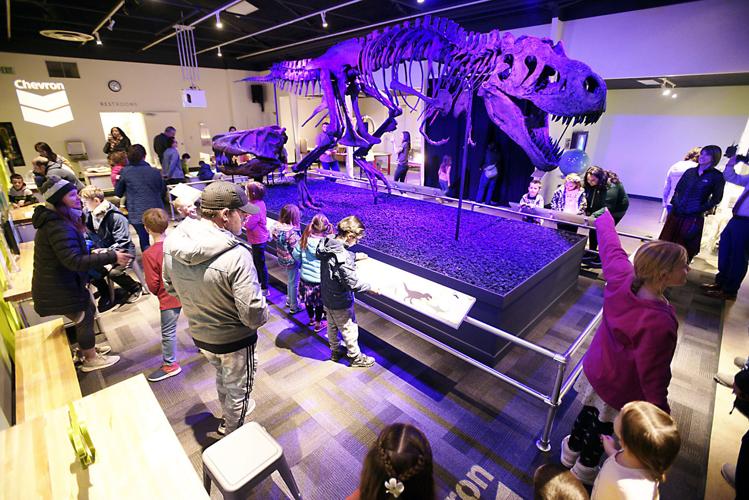
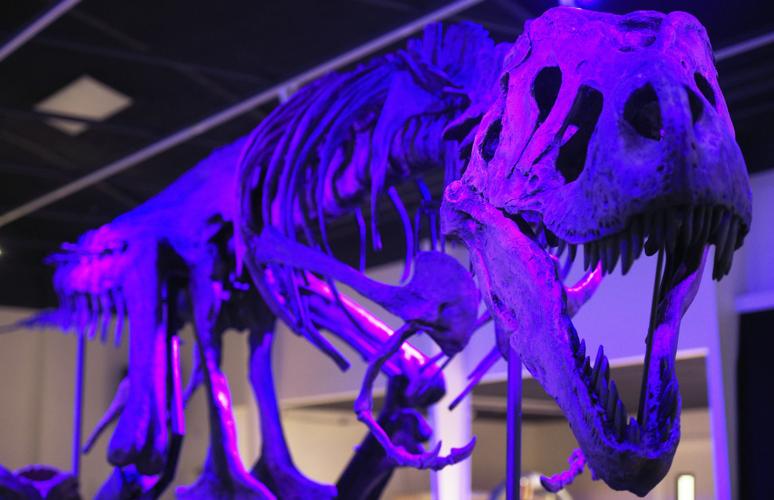
Standing 9 feet tall and 30 feet long, “Tinker,” the new T. rex on permanent exhibit at Discovery Center of Idaho in Boise, is the first of her kind to call Idaho home.
Unlike Sue, Tinker’s full-grown predecessor who stomped in at the center as a visiting exhibit in 2017, Tinker is a cast of the most complete juvenile T. rex skeleton found to date.
“T. rex’s are North America’s dinosaur,” said Emily Mahon, education director for the Discovery Center of Idaho. Mahon said it makes sense for Tinker to take up permanent residence there. After all, “there was was time when Trannosauroids, precursors to T. rex, were running up and down (what’s now) the streets in Idaho — 66 million years ago,” she said.
Tinker was discovered in South Dakota in 1987 and is more than 66 million years old. Besides Tinker’s fossils, those of her mother’s and possibly a sibling were found at the same site.
Tinker has seen a lot of ups and downs since she was dug up, including a number of courtroom dramas regarding ownership and bankruptcy issues. She was finally displayed on a temporary basis in Abu Dhabi in 2014.
In 2015, she went up for sale again — for about $12 million.
Now, thanks to Discover Center’s presenting sponsor Chevron and the staff members who pieced Tinker together, visitors can get up close and personal whenever the doors are open.
And if you’re wondering why she is a “she”?
“Well, no one really knows what the sex of a dinosaur is,” Mahon said. But the remains of those discovered are designated according to the person who made the initial discovery. “(Tinker) was discovered by a woman.”
Viewers might notice that some of Tinker’s ribs have “nodules,” or bumps, on them. That’s due to injuries she incurred along the way, said Mahon, and actually are calcifications from broken ribs.
The skeleton as it is today was not only pieced together by Discovery Center staff — a feat that took a little more than a week — it also was filled in.
“Only 50 percent of the skeleton was found, so they had to fill in the rest,” Mahon said.
Molds of the fossilized bones were used to make casts, or replicas, of the original fossils. Other T. rex fossil casts and sculpted reproductions were all used to then create Tinker’s “fully articulated skeleton.”
Robert Klusaw, exhibits fabricator, said putting the pieces together was a challenge.
“Some were numbered — but not all,” he said.




(0) comments
Welcome to the discussion.
Log In