



IDAHO FALLS — Jessika Torrans has grown accustomed to the worrying looks of others when she takes her 6-year-old daughter out to the grocery store.
The onlookers see a child with behavioral issues far greater than the average child that age tends to exhibit in public. Jessika describes her daughter Avery as all over the place and sometimes irritable, depending on her mood. A hyperactive child lacking the awareness that Avery does can make it difficult and occasionally impossible for Jessika to run errands.
“I’m very picky choosy on where I go and when I go,” Jessika said. “If she’s being really erratic that day, then we’re probably not going to go. But it sucks because at the same time, she’s probably acting like that because she’s been stuck at home.”
Jessika is prepared for interactions with strangers and often hands the concerned individual a business card containing a picture and a small note that explains Avery’s behavior is a result of a very rare and severe disease.
Avery was diagnosed with Sanfilippo syndrome, or mucopolysaccharidosis type III in November. According to the Sanfilippo Children’s Foundation, one in 70,000 children are born with the disease. It’s commonly compared to dementia as children show neurodegenerative activity over the course of their lives.
Sanfilippo syndrome is terminal and most children who are diagnosed die during their teenage years although some live into their 20s and 30s. Children with the disease commonly lose motor functions and are unable to walk or speak after age 10.

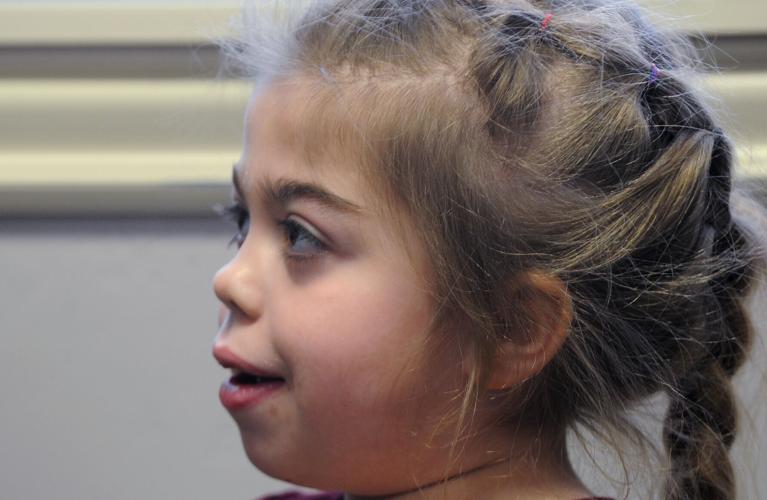
Avery Torrans, age 6, was diagnosed in November with Sanfilippo syndrome, a rare disease that affects the nervous system and neurological deve…
The disease is genetically inherited and caused by a patient missing enzymes that are essential to breaking down sugar molecules used to build connective tissues in the body. These molecules remain stored in the body’s cells, causing progressive damage to mental and motor functions. There are four different types of mucopolysaccharidosis type III depending on which enzyme the patient is missing. Avery was diagnosed with Type A, which is considered to be the most common and severe type, resulting in earlier death than the other types, according to the Team Sanfilipo Foundation website.
Jessika said the diagnosis was a shock. Avery developed normally and hit all her expected milestones until she started displaying behavioral issues at age 3, causing some concern from her preschool teacher at the time. Avery’s behavior led Jessika to pull her out of kindergarten class a few years later.
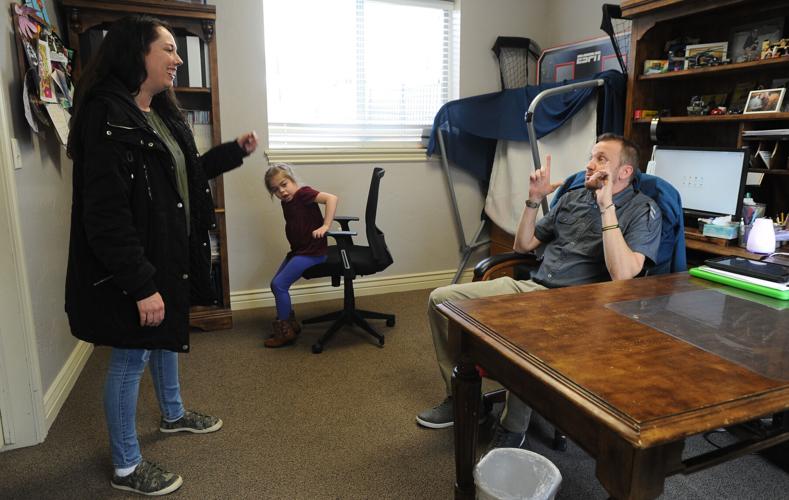
Sanfilippo syndrome often causes Avery’s behavior to be erratic. Her attention span is less than most children her age and at times it’s seemingly nonexistent. Avery’s speech language pathologist, Matt Foster, often has to employ a tactic he calls “redirection” during therapy sessions. Redirection involves taking away whatever object is distracting Avery from the activity he’s trying to get her to do or directly presenting the activity right in front of her to help her focus, often aided by audio and visual cues.
Avery seems to have no understanding of her external environment, Jessika said. This is one area Foster has tried to address during therapy because Avery doesn’t understand that running away from Jessika in a parking lot could lead to her being hit by a car and she doesn’t grasp the concept of “stranger danger.”
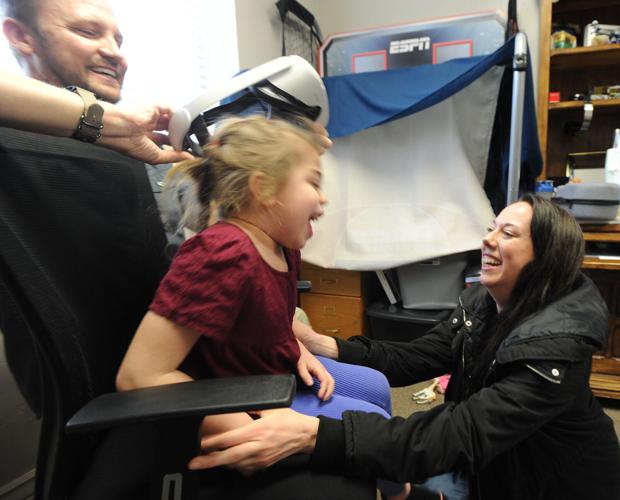
To help control those impulses, Foster recently started using an Oculus virtual reality headset in his therapy sessions to help Avery learn to scan her environment. He’ll ask her to describe what she sees, although she’s currently reluctant to put the device on and will wiggle her way out of it after a minute or two.

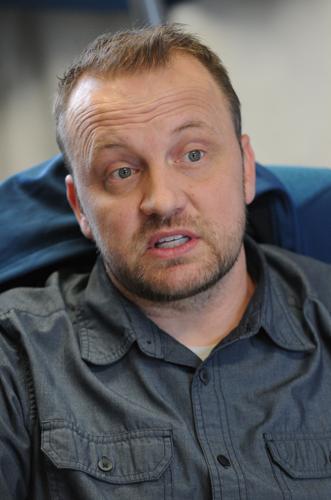
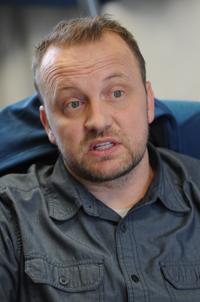
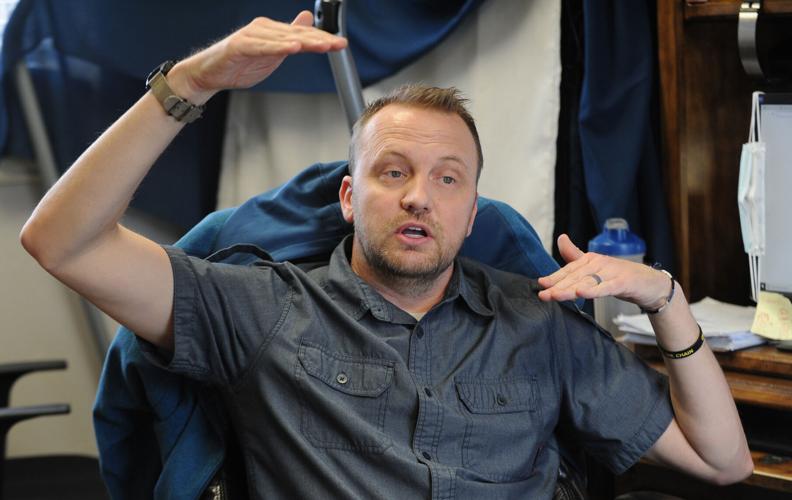
Speech language pathologist Matt Foster talks about some of the techniques he uses to help 6-year-old Avery Torrans at his office Feb. 10. Ave…
At first, Jessika and Avery’s teachers suspected she may have a more common attention deficit disorder such as ADHD or ADD. Jessika was floored when a doctor recommended Avery to undergo gene testing to determine if she had an intellectual disability because of Avery’s development. A geneticist in Utah diagnosed Avery with mucopolysaccharidosis type III on World Sanfilippo Awareness Day, Nov. 16.
Mental regression is starting to affect Avery. Jessika said Avery no longer sings as much as she used to just a few years ago, despite Avery loving to do so. Avery also shows signs of regression to some infancy tendencies, mainly oral sensory. Avery’s first reaction when holding an object is to place it in her mouth, which young children do to explore their environment.
“I never really had to worry about her putting stuff in her mouth when she was a baby,” Jessika said.
Eventually, Avery will stop speaking and then stop eating, because her body will be unable to chew and swallow food.
“She’s going to un-develop before our eyes essentially,” Jessika said. “It’s devastating to watch and see.”
Avery has therapy three times a week to help slow down her regression as much as possible. Foster said in his 15 years of experience working in therapy, Avery is the first child he or any associate he knows has seen with Sanfilippo syndrome.
Foster has modified his therapy to help Avery retain her short-term memory. This includes having Jessika park her vehicle in the same spot every session. When Foster walks Avery out of his office, he asks her to find her mother’s car, which she’s gotten quite good at.
He also has Avery take off her shoes during his sessions and he tosses them to the side but still in plain view. He does this with the hope that Avery will remember that she needs to put on her shoes before going outside. Sometimes, she’s able to do so on her own but, if she forgets, she eventually remembers with Foster’s guidance. Foster calls this an example of “throwing loops” at his patients and he does this because it’s been beneficial for dementia patients he’s worked with.

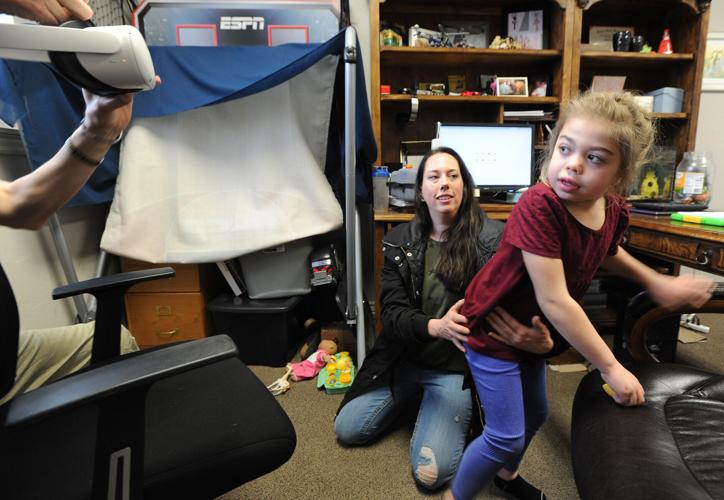
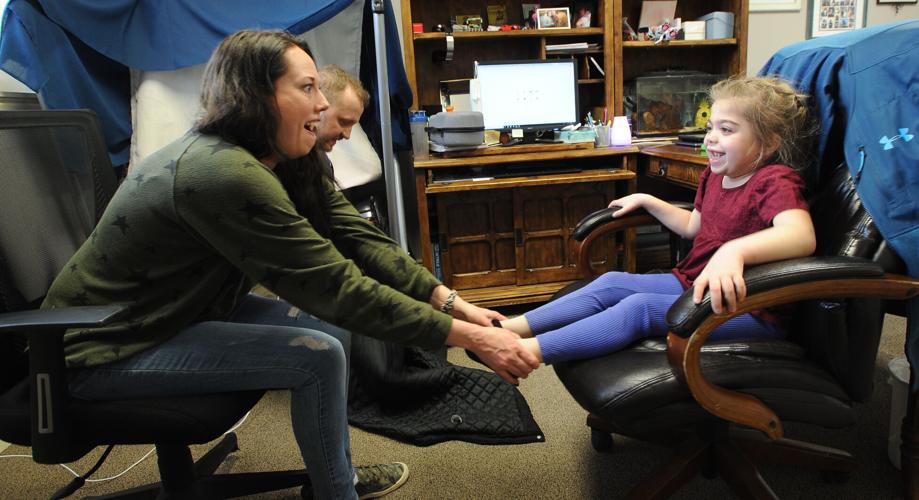
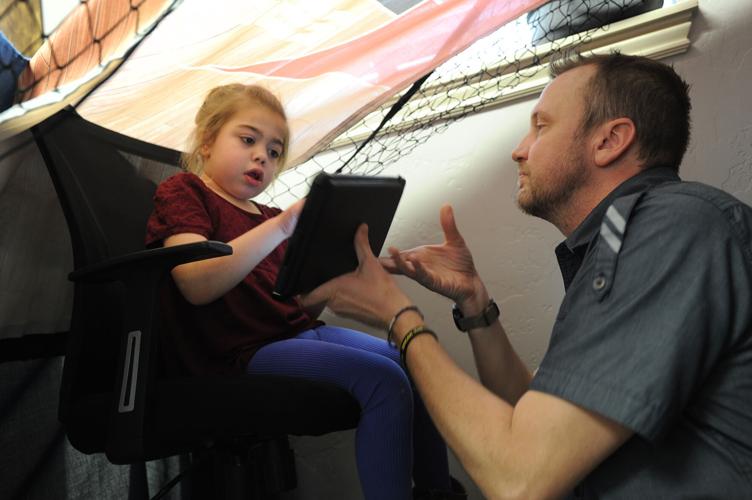
Speech language pathologist Matt Foster works with Avery Torrans on Feb. 10. Foster creates a “tent” to reduce distractions and allow Avery to…
Foster has a foldable mini basketball hoop in his office. He uses it as a makeshift tent when he does activities with Avery by pulling it down on the two of them to keep her focused on whatever he has her doing. One activity he does is letting her play with a bin of toy animals he has and then asking her to identify the animal she’s holding on an iPad app. But even on the best days Avery’s focus is fleeting.
“She’s kind of like a human pingpong ball,” Foster said.
Foster said therapy has helped Avery improve some of her cognitive function such as realizing she’s missing her shoes, but she’s also shown regression or a lack of improvement in others including her speech patterns and oral sensory. He said he believes this is caused by her motivation. Her desire to see her mother improves her awareness of putting on her shoes before she leaves Foster’s office. But her desire to play with her toys, combined with the buildup of the molecules causing the regression in her brain, could be leading her to put the toys in her mouth.
No parent ever plans for their child to have a condition like this, Jessika said. She still feels shock about the diagnosis and realizes she’s coping through it.
“This is not the lifestyle you predicted so you grieve the child you never had to an extent,” she said.

Speech language pathologist Matt Foster and Jessika Torrans work with Jessika’s daughter Avery during a session Feb. 10. Avery, who is 6-years…
Being Avery’s parent and seeing her every day makes it difficult to grasp what is happening to her and what will eventually happen, Jessika said. Avery is still very much herself and like many 6 year olds.
“It’s hard to believe that we’re living it because she’s still her,” Jessika said. “She’s still running around, screaming and acting silly and getting into everything that drives me effing crazy but some day she won’t be able to.”
Avery loves her baby sister Penny more than anything in the world and she enjoys playing with her cousins on family outings. Like many other young children, Avery loves to paint and draw, even if it only amounts to scribbles, she said.
“She goes 1,000 miles an hour times a million,” Jessika said. “She’s very happy-go-lucky and always in the moment.”
Jessika and her husband Nigel Brizzee don’t suspect Penny of having Sanfilippo syndrome, although she may be a carrier like both Jessika and Brizee are. Statistically, one in four children will be diagnosed with the disease if both parents are carriers. They are testing Penny so they can take preventative measures as soon as possible if she does have it.
There are no treatments to cure Sanfillipo syndrome, but there are methods to slow down the regression that’s caused by it. The Sanfilippo Children’s Foundation website says clinical trials are underway as researchers attempt to develop effective treatments, and gene therapy may be the most promising route to explore.

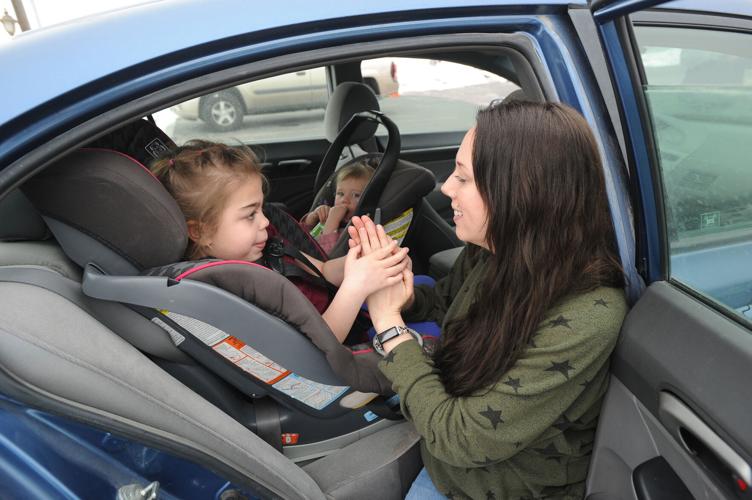
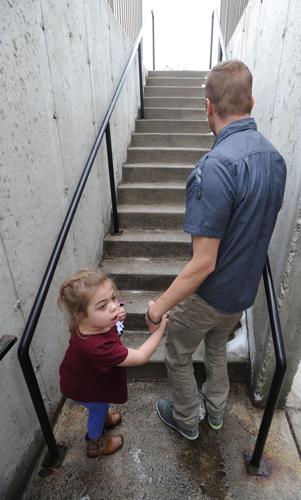
Jessika Torrans gets her daughter Avery secured in a car seat after Avery’s visit to a speech pathologist Feb. 10. Avery who is 6-years-old wa…
Jessika advises parents to get their children checked out as soon as possible if they suspect their development isn’t quite right because early diagnosis is critical with severe diseases.
Jessika said it’s a confusing time to be a parent, but the diagnosis has helped her and Brizzee understand Avery a lot better. She said she hopes people are more understanding if they see a parent with a child who is acting erratic because “you don’t know what’s going on in their home.”



(0) comments
Welcome to the discussion.
Log In