

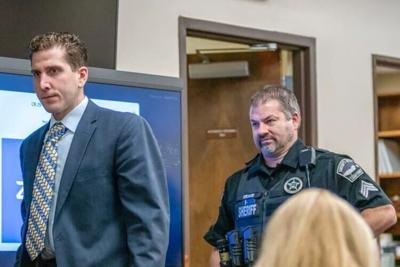
Bryan Kohberger’s attorneys are working with an expert who says it’s likely two people were responsible for the Nov. 13, 2022, murders of four University of Idaho students.
This was one of the many details that emerged during a Wednesday court hearing regarding evidence in the murder case. The hearing was held in front of Ada County District Judge Steven Hippler.
Kohberger faces four counts of first-degree murder and one count of burglary in the stabbing deaths of Kaylee Goncalves, Madison Mogen, Xana Kernodle and Ethan Chapin. He could face the death penalty if convicted.
Wednesday’s hearing touched on a variety of topics including the possibility of alternative perpetrators, video evidence, Kohberger’s autism disorder and his Amazon purchase records.
Kohberger’s defense team is planning to show alternative perpetrators could be responsible for the Moscow murders after it finishes further investigations. Hippler ordered them to present that evidence before the trial so that the prosecution has time to investigate.
Kohberger’s attorneys did not go into detail, but his lawyer Anne Taylor said they have produced an expert that believes it’s likely there were two people and two weapons involved in the murders. She also claimed to have found a “pretty good lead” in the evidence that she is following up on.
Kohberger has yet to provide witnesses that corroborate his alibi that he was driving around at night away from the crime scene when the crime occurred. His cellphone was allegedly turned off during the time of the murders, which is why experts can’t use cell tower evidence to pinpoint exactly where he was during those moments.
Kohberger’s attorneys spent much of Wednesday’s hearing trying to get ahead of evidence that it believed the prosecution might present during trial.
For example, they stated that law enforcement recorded hundreds of hours of interviews with Kohberger’s classmates at Washington State University. According to Kohberger’s team, his classmates made “unkind” and “awful” comments about the suspect during these interviews.
Kohberger’s attorneys blamed his autism for how his classmates perceived him, which is why they asked Hippler to prohibit this evidence from being used. However, Deputy Attorney General Jeff Nye said the prosecution does not plan on presenting these interviews during trial because it has better evidence against him.
According to defense attorneys, the prosecution has dug up a paper Kohberger wrote while a student at DeSales University that shows he knows how to clean up a crime scene. They questioned the relevancy of this evidence, in addition to the relevance of video footage showing Kohberger being stopped for a seatbelt violation the night of Aug. 21, 2022, in Moscow by Latah County Sheriff’s Deputy Darren Duke.
During that traffic stop, Kohberger initially ditd not want to give the police his cellphone number and made a comment about how he doesn’t think seatbelts offer much safety. His attorney Elisa Massoth said the jury might draw unfair conclusions from this conversation. However, the prosecution claimed it is only using this video to confirm Kohberger’s address, date of birth, phone number and the fact that he drove a Hyundai Elantra.
Hippler said he will look at the video and indicated he may redact some parts of Kohberger’s conversation with Duke.
A white Hyundai Elantra was described as the suspect vehicle during investigation into the murders. Law enforcement has gathered surveillance footage from the area around the King Road house where the murders occurred allegedly showing the vehicle around the time of the crime.
Taylor urged the judge to not allow experts to testify that these videos conclusively show the suspect vehicle. Hippler said he will consider this, but he did say the prosecution is still allowed to make this claim during its closing argument.
Kohberger’s team is trying to prohibit evidence from Kohberger’s AT&T and Amazon records. It claims the prosecution has not been forthcoming in providing certain AT&T records to the defense. However, Hippler admonished the defense for not providing evidence backing this up.
Latah County Deputy Prosecutor Ashley Jennings said her team has not received the records from AT&T that the defense is referring to.
The defense’s request to prohibit Kohberger’s Amazon records as evidence in the case also caused confusion. Records show Kohberger allegedly bought a Ka-Bar knife, a sheath and a knife sharpener from Amazon in March 2022. A Ka-Bar knife is believed to be the murder weapon, and Kohberger’s DNA was allegedly found on a sheath left at the crime scene.
The defense claims that the Amazon account is also used by Kohberger’s family members, though Hippler pointed out that the knife was bought under Kohberger’s specific name. They also argued that the prosecution is misrepresenting Kohberger’s Amazon click activity because it is not taking into account how Amazon uses artificial intelligence or machine learning in its click data.
Jennings said AI cannot make purchases for a customer, so that argument is irrelevant.
Kohberger’s attorneys continue to claim that the jury will be prejudiced by how the suspect behaves in the courtroom. They say his autism means he may look emotionless and be unable to read the room.
Massoth said they are concerned how the jury will judge his appearance, especially since the media has already described his appearance as “evil.”
Massoth urged Hippler to allow witnesses to testify why the jury should not judge Kohberger on his behavior in court. Hippler said there is no legal Idaho precedent for a judge to do this during a trial.
Prosecutor Bill Thompson argued Kohberger’s appearance is irrelevant to the facts. He said addressing it will simply confuse the jury while also playing to their sympathies.
The defense is also asking Hippler to strike the death penalty on the basis of Kohberger’s autism, which also has no legal precedent.
Both sides accused each other of missing deadlines for sharing evidence in this case. Taylor said she has still not reviewed all the evidence that has been made available, which includes 50 terabytes of data, as well as new evidence coming in. Jennings pointed out that the defense has had that 50 terabytes of data for more than two years.


(0) comments
Welcome to the discussion.
Log In