

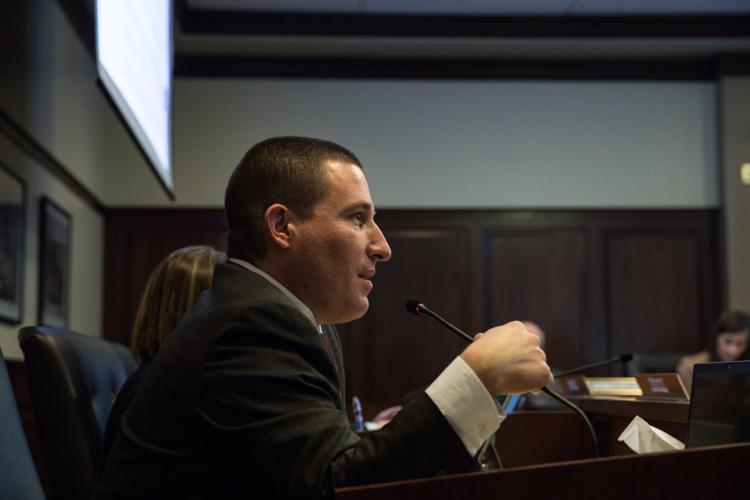
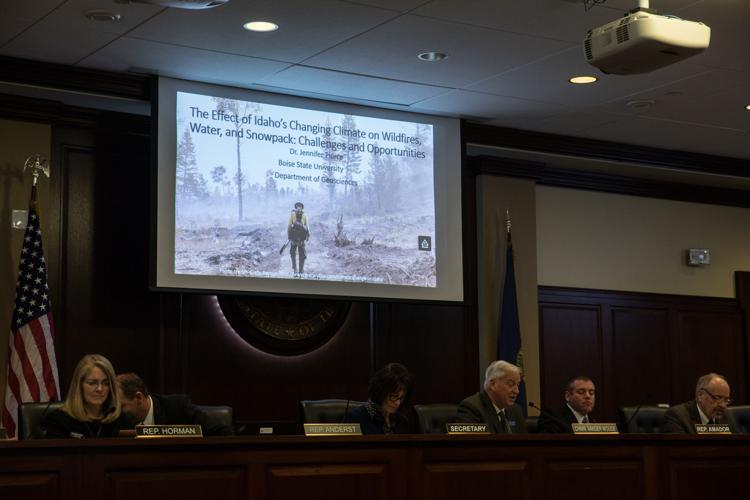


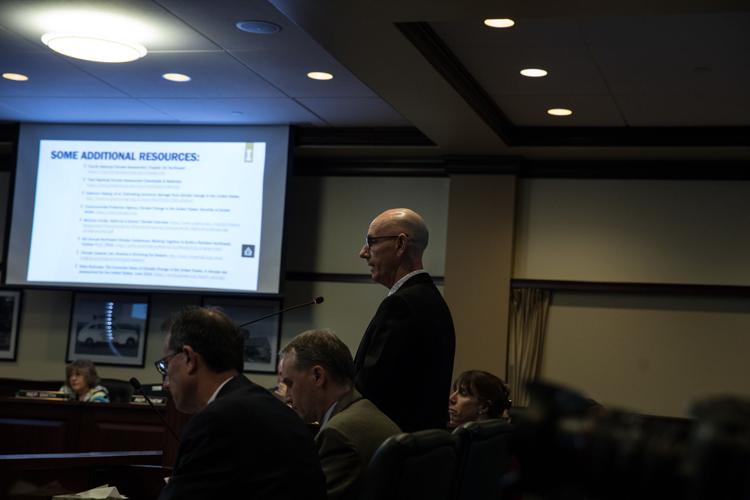
BOISE — One thing became clear after Idaho’s first House Environment, Energy & Technology Committee climate change hearing: The data needed to assess climate change outcomes in Idaho is scarce.
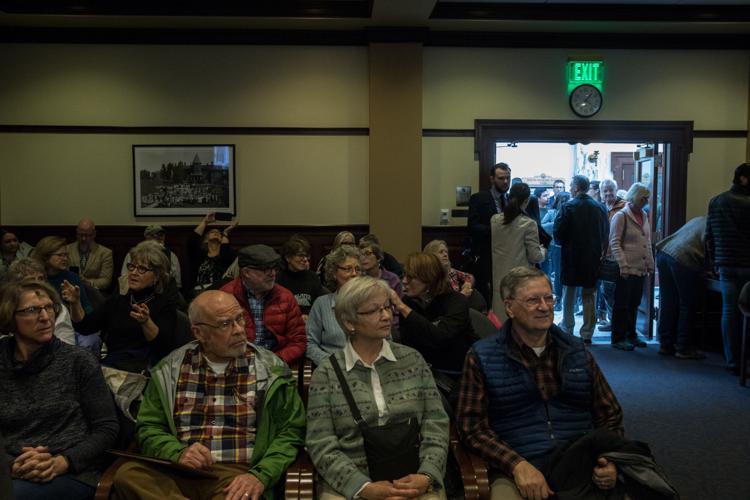
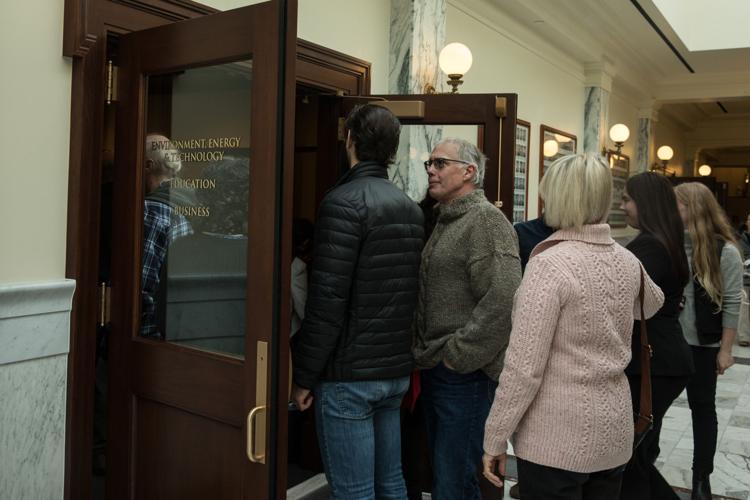
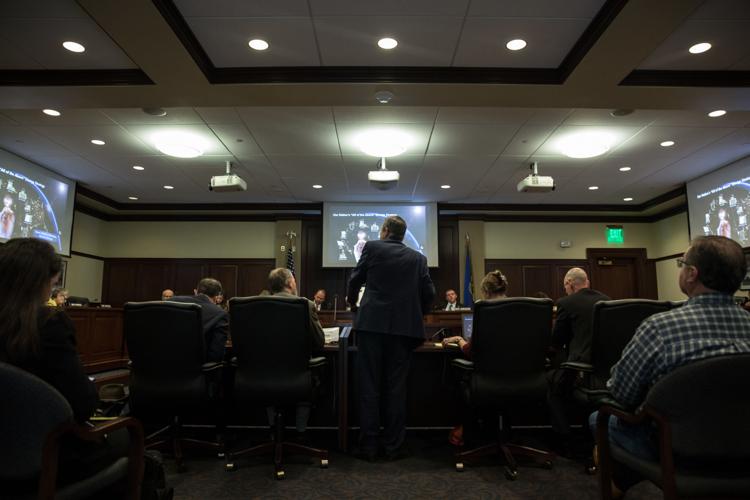
Following Gov. Brad Little’s recent and public remarks supporting the existence of climate change, Reps. Ilana Rubel and Rob Mason, both D-Boise, co-hosted the hearing Wednesday. The room ran out of seats 30 minutes before the start time, and overflow audience members watched a video stream in the room next door.
Environmental scientists and strategists who spoke at the hearing mentioned a severe lack of data. At this point, all we can do is speculate about what major economic impacts Idaho could see as a result of climate change, said Dr. Jaap Vos, head of the Bioregional Planning and Community Design program at University of Idaho.
Discussions between climate change scientists and economists haven’t happened yet, Vos said.
“There’s lots of information out there, but there’s very little Idaho-specific information out there,” he said. “We need more research before we can make decisions on how to move forward.”
Potential impacts could be lower snowpacks, leading to reduced winter tourism; increased burned acres; and higher wildfires costs. Some changes could be positive, such as a higher corn yield.
“Compared to some other regions we might have some potential positive impacts in our agricultural production as well as negative impacts,” Vos said.
Canyon County was a frequent example of climate change’s impact on agriculture. The range of crops in Canyon County makes it hard to predict what temperature fluctuation could mean — different crops react differently to weather changes.
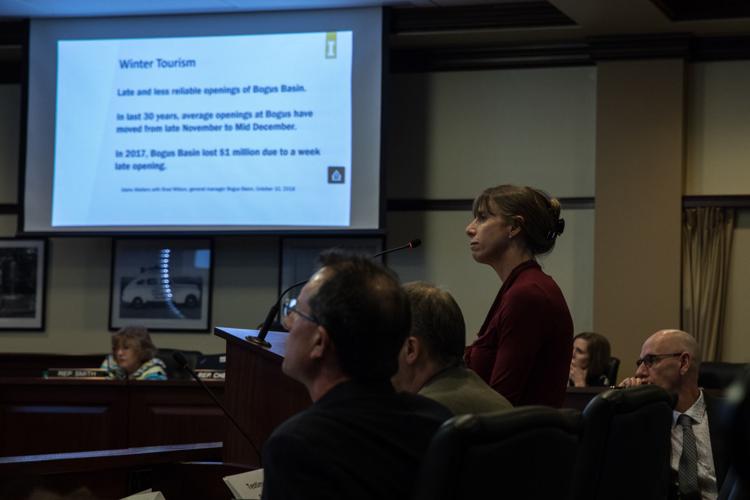
However, Vos said, we can predict some changes by looking at past trends. He cited a 2018 Idaho Matters interview with Bogus Basin General Manager Brad Wilson, who said Bogus lost $1 million in 2017 after having to open a week later than scheduled. In the last 30 years, Wilson said, the opening date has moved back from November to mid-December.
“We are starting to see some real costs, if you look at the example of Bogus Basin there’s a real cost,” Vos said.
Dr. Jennifer Pierce, associate professor in the department of geosciences at Boise State University, talked to committee members about the challenges of addressing longer and more intense wildfire seasons.
The wildfires that compromise Idaho’s forests “ultimately affect Idaho’s pocketbooks,” she said.
With the possibility of rising temperatures and a drier climate, officials need to look at ways to mitigate human-started fires, which made up for 84 percent of all wildfires in 2017, she said.
The 2016 Pioneer fire in Idaho City had a huge impact on the community’s economy, Vos said. Because of the damage yurts, campgrounds, roads and trails were closed affecting tourism — some trails were closed for as long as two years.
Some steps have been taken to mitigate fires such as plowing along Interstate 84 between Boise and Mountain Home to reduce the risk of grass next to the highway catching fire from passing cars, Pierce noted.
But with a gap in research on potential impacts scientists could merely suggest possible technology that could be implemented in the future to circumvent climate change impacts.
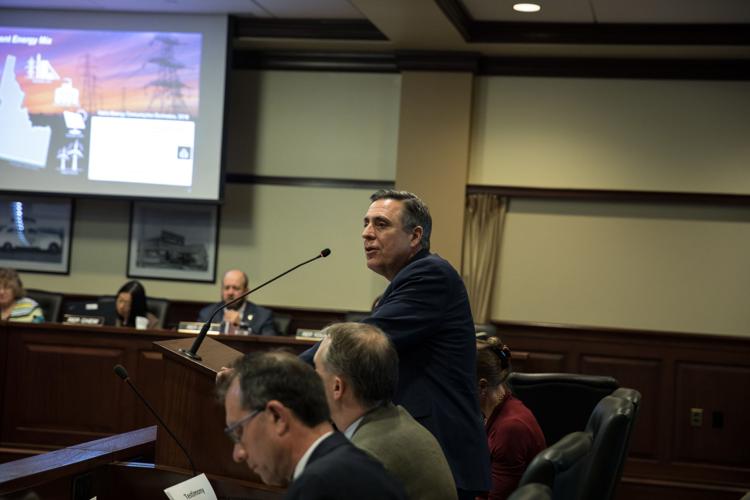
Dr. Mark Peters, lab director at the Idaho National Laboratory, discussed renewable energy possibilities ranging from solar and hydropower to the possibility of nuclear power. He called for more partnerships between environmental scientists and utility companies, universities, the private sector and municipalities. The national lab is exploring many things, he said, including micro-grids that can power smaller communities more efficiently.
“We are a clean energy system if you look at our energy system, a lot of hydro a lot of renewables,” Peters said. “We can drive the innovation that’s necessary to create that clean energy system, deploy it in Idaho and be a national leader.”
Cooperate environmental strategists from HP and Simplot also addressed climate change as it affects business.
“The science is clear, the impacts are serious and the need to act is essential,” David Eichberg, chief sustainability and social impact officer at HP, said. “We encourage you to explore policy solutions that help mitigate climate change and transition to a low carbon society.”
However, Alan Prouty, vice president of environmental and regulatory affairs for Simplot, was not slow in pointing out that changing to different energy sources to mitigate climate change could have negative impacts on the agricultural industry.
“Marketplace carbon, carbon free and all those have real implications on agriculture and food processing in Idaho,” he said.
Changes in the energy structure can drive higher costs for farmers and therefore higher prices for consumers.
“For certain types of manufacturing operations including food processing, there is a certain level of fossil fuel usage that’s going to happen and there’s limits to what technology can do,” Prouty said.
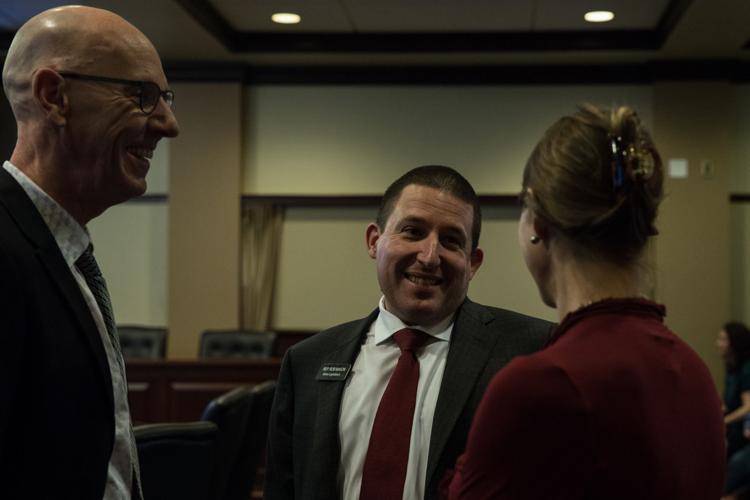
After the hearing, Rep. Mason and committee chairman Rep. John Vander Woude, R-Nampa, agreed the lack of information was startling.
“It did highlight for me that we have not really had any of these conversations or even looked at specific Idaho impacts,” Vander Woude told the Idaho Press. “I thought that they were going to have more information on impacts, and virtually every last one of them said, ‘I really don’t know how this affects Idaho.’”

(0) comments
Welcome to the discussion.
Log In