
About halfway through the first meeting of a governor’s task force on autonomous vehicles recently, Idaho Transportation Department Director Brian Ness lightened the mood by saying if a police officer pulled him over for speeding in a self-driving car, he’d tell the officer to write the ticket to the car instead.
The remark drew laughter from the crowd in the department’s District 3 office in Boise, but it was rooted in truth: If a fully autonomous vehicle is caught speeding, or swerving, or causes a crash, who is liable — the driver, the manufacturer or the technicians who worked on it last?
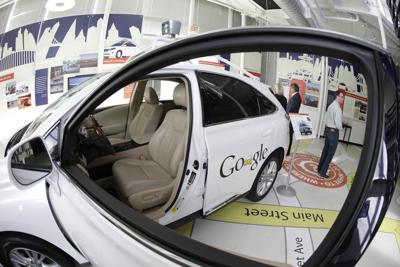
It was one of many questions the Idaho Autonomous and Connected Vehicle Testing and Deployment Committee will research in the coming months. Right now, there are no autonomous vehicles — meaning vehicles that can, to varying degrees, drive without human operation — on roads in Idaho.
But in January, Idaho Gov. Butch Otter established the committee to research the possibility. He gave committee members a Nov. 1 deadline to compile a report of their findings. Committee members, who represent groups including government, law enforcement and the automobile industry, will examine legislation and regulations passed in other states and see how those laws can be adapted for Idaho drivers.
The National Highway Traffic Safety Administration has issued guidelines for licensing drivers of automated vehicles, but the process itself has been left to state governments.
The first state to begin that process was Nevada in 2011, where authorities are contemplating a self-driving shuttle to take tourists from the airport to hotels within the city.
Earlier this year, Michigan opened one of the largest testing facilities for self-driving cars in the nation.
Since 2012, a total of 41 states have considered legislation to allow autonomous vehicles on the road.
“The future’s going to be here faster than we think it is,” Ed Bala with ITD said.
Yet many of the committee members paired their enthusiasm for the new technology with a healthy dose of patience. Most of them said they wanted to see what happened in other states and learn from them before they endorsed fully automated vehicles on Idaho’s roads.
“Let’s let (the other states) solve some of the problems first, but we need to be at the table, and that’s right where we are,” Ness said. “What are the things we are responsible for as a state? Those are the things we really want to zero in on.”
The committee will meet again in August and October and plans to discuss issues such as liability in the event of a crash, as well as cyber-security, because self-driving cars may present opportunities for hackers.
Autonomous vehicles not only drive themselves using a computer system, but they may also communicate with traffic signals, like stop lights, through computer software. While there are advantages to this, it means security will be paramount to a smooth operation.
“Cybersecurity has always been my issue with it,” said Linda Jones, the Lincoln County assessor. “How easily can these things be hacked? Are they going to require some sort of virus protection in the vehicle since it’s a moving computer?”
Technology also raises questions for law enforcement, who were represented at the meeting in part by Idaho State Police Lt. Col. Sheldon Kelly. He pointed out in the event of a crash, officers will have to determine who was at fault — the vehicle’s software or the human driver. It would require a great deal of new training for law enforcement, he said, and it would change how they investigate crashes.
Committee members also discussed the positive changes autonomous vehicles could bring to Idaho. They would allow the elderly and those with physical disabilities to drive on their own.
Autonomous vehicles may also allow traffic to move faster. Bala, from the transportation department, cited preliminary research that estimated if 75 percent of cars on the road were automated, the number of cars that could travel a given highway lane in an hour could double.
And autonomous vehicles may also make driving safer in inclement weather, because cars would respond to signals from equipment on the road and would not be affected by the poor visibility of a snowstorm.
For all of those reasons, the committee felt the research was worthwhile, and necessary. But they acknowledged that the recent meeting was only the beginning of the process. Thornier issues, such as funding and infrastructure demands, will likely be taken up by the state Legislature later on.
“This is a whole new world,” said Sam Eaton, who works as an attorney for the governor’s office. “We’re sitting here setting policy. ... That’s pretty exciting.”

(0) comments
Welcome to the discussion.
Log In