

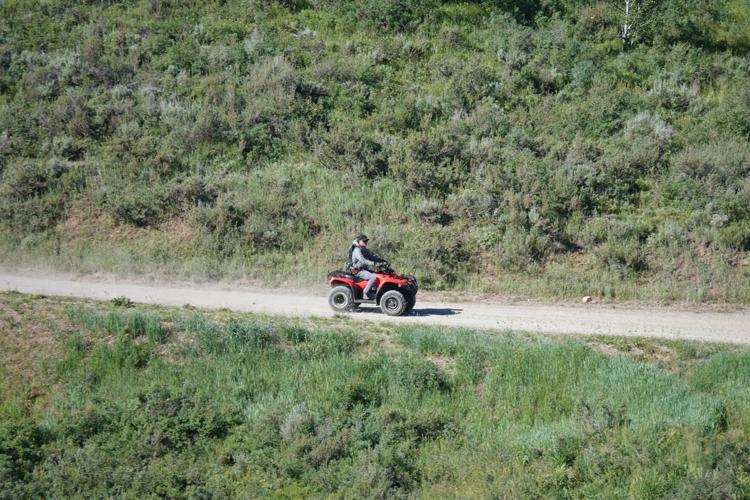


The ability to hunt and fish is a function of gaining motorized or pedestrian access to these species’ habitats.
Entry to private land comes through permission or leases. On federal and state land, how a person accesses these habitats is determined by regulation. President Donald Trump has proposed several changes that could affect motorized access on federal land.
If you’re someone who favors motorized vehicle use, this may sound positive. My guess is that the outcome of these changes will be minimal and muddled.
I’ll state my bias up front. I mostly drive on well-maintained dirt roads, park, then hike. This inclination does not keep me from supporting motorized access where it has a history. For example, it is important to secure motorized easements across private land where they have long been used to access public trails or roads. It doesn’t matter whether you hike or ride, there is a broad spectrum of attitudes shared by outdoor enthusiast.
Proposed changes in motorized access primarily address overall travel management and rules affecting roadless areas. These changes commenced after President Trump used an Executive Order to eliminate two prior Executive Orders from Presidents Richard Nixon and Jimmy Carter. The goal of these earlier EOs was to provide safe travel in a manner that limited landscape damage that could be caused by all-terrain vehicles.
One misplaced concern is that there are Forest Service roads where an F150 or Tacoma is allowed but an off-highway vehicle is not. While the federal rules can be confusing and are full of exceptions, they generally defer to what the state requires when operating motorized vehicles. For example, Utah and Idaho require registration stickers and driver’s licenses or education certificates for younger drivers to operate off-road vehicles or motorcycles on Forest Service roads and trails. States like Washington are stricter and require all vehicles operated on national forest system roads to be registered and driven by a person with a driver’s license. So don’t blame the feds for these issues.
Where and when roads are open to street legal vehicles, off-highway vehicles and motorcycles are described in Motor Vehicle Use Maps for the Forest Service and through the Bureau of Land Management’s Comprehensive Travel and Transportation Management Program. It has taken more than 20 years for these agencies to publish maps that help the public understand where motorized vehicles are permitted. A motorized use group, One Voice for Off-Road Motorized Recreation, gives a letter grade for how well Forests provide motorized access. The Uinta-Wasatch-Cache National Forests received a B. The Caribou-Targhee National Forest received an A. A plurality of forests, however, received D’s and F’s.
A meaningful strategy that protects landscapes, fish, game, threatened and endangered species, is the 2001 Roadless Rule. Utah Senator Mike Lee recently added an amendment to repeal the Roadless Rule in a bill addressing wildfire risks based on the argument this rule makes fuels management and firefighting more difficult. There is a smidgeon of truth to this statement, as the Forest Service has been risk adverse or overly aggressive when proposing management in roadless areas. The broader reality is that human initiated wildfires burn most of the human structures (76%), that more roads result in more fires, and it is often the private landowner whose backyard borders federal land that doesn’t want this vegetation managed.
Some argue the roadless rule restricts motorized vehicle access. If that is the case, why do the Uinta-Wasatch-Cache and Caribou Targhee National Forest get good grades for motorized access when both forests consist of areas primarily designated as roadless? It is because the designated roadless areas occur between the many roads and trails. What is needed is increased maintenance. Many open roads are too rutted to be traveled by four-by-four trucks and numerous motorized trails are obstructed by rockslides and fallen trees.
It has taken five decades, 10 presidents, numerous regulations and a few lawsuits to implement a standardized approach for motorized vehicle use on federal lands. For the most part, the current plan reflects meaningful compromise. This does not mean there aren’t additional motorized routes that need to be added or subtracted from these systems. Public land management agencies already have the mechanisms within their travel management programs to allow such changes to occur, they just need to take advantage of them.
Open discussions and decisions that link roads to the public and management needs is the proper approach to modify federal road and trail use. The problem with the proposed tactics of this current administration is that it attempts to reset motorized use on federal land. Such a step by this administration could result in changing motorized use rules following the election of every new president. Unremitting change in what roads and trails are open or closed to motorized use won’t benefit the public, fish or wildlife populations.


(0) comments
Welcome to the discussion.
Log In