


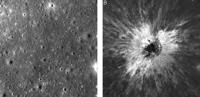
Scientists have discovered a crater on the moon that's bigger than the Roman Colosseum, the result of a powerful impact two years ago. Researchers reported Wednesday that it's the solar system's biggest known impact crater carved out in recent times. They say such a large-scale event is estimated to occur only once every 132 years, making this a treasure trove of information as NASA prepares to build a base for astronauts on the moon. NASA's Lunar Reconnaissance Orbiter spotted the crater after it was formed by a comet or asteroid fragment.

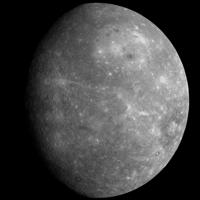
A new study shows that little, wrinkly Mercury may be shrinking faster than expected. Scientists from the German Aerospace Center reported Thursday that Mercury's shrinkage may be 30% greater than previously believed. They say that represents a loss in diameter of as much as 14 miles, significant for a planet that is barely 3,000 miles across. Mercury has been shrinking ever since its formation 4.5 billion years ago because of internal cooling, which is tightening the surface like a girdle to fit its new slimmer self.


Like many high schools across the country, Aliquippa football games are a cherished tradition, connecting the community’s past and present. The Western Pennsylvania town comes together on Friday nights during the fall to support the home team. This tradition is part of a broader American experience where high school sports foster community spirit and personal growth. Despite changes over the years, the essence of teamwork and connection remains strong. For many, sports offer a path to college and new opportunities, while also preserving a sense of belonging and pride in their roots.

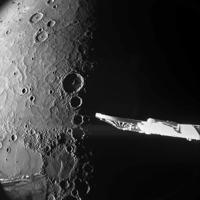
Two Mercury-bound spacecraft are in the home stretch of their nearly decade-long voyage. The linked spacecraft — one European, the other Japanese — separated from their mother ship on Thursday. If all goes well, they'll enter orbit around Mercury in November and split from each other in December to map and study the planet. The BepiColombo mission launched in 2018. It's named for the Italian mathematician who took part in NASA's Mariner 10 mission to Mercury in the 1970s. Only one other spacecraft, NASA's Messenger, has explored our solar system's smallest and closest-to-the-sun planet.

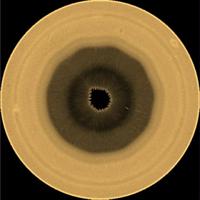
This photo provided by NASA/ESA/A. Sánchez-Lavega (Basque Country University) shows a pattern of clouds around the Saturn's south pole on Saturday, Aug. 29, 2026. (NASA/ESA/A. Sánchez-Lavega, Basque Country University, EHU, via AP)
Scientists have discovered an enormous 10-sided wave pattern in the icy ammonia clouds over Saturn's south pole. A Spanish-led team reported Wednesday that the spinning, meandering decagon appears to be even bigger and more unstable than the hexagon of clouds around Saturn's north pole that's been visible for decades. This new jet stream formation popped up in the Hubble Space Telescope's sights in 2023. It's massive: A single side of the decagon surpasses 10,000 miles. Scientists detailed their findings in the journal Science Advances.

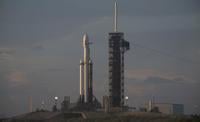
NASA’s newest space telescope has blasted off on a quest to find planets around other stars and explore the hidden universe. SpaceX launched the $4 billion Roman Space Telescope on Sunday from Florida’s Kennedy Space Center. Roman blazed toward an observation point 1 million miles away that’s home to the Webb Space Telescope, one of NASA’s other crown jewels in the sky. Roman will take three months to reach its destination. Once there, it will survey the cosmos like never before. The telescope is named after the late Nancy Grace Roman, NASA’s first chief astronomer.
Today is Monday, Aug. 24, the 236th day of 2026. There are 129 days left in the year.
A blood-red moon will soon grace the skies for a total lunar eclipse — and there won't be another until late 2028.
