

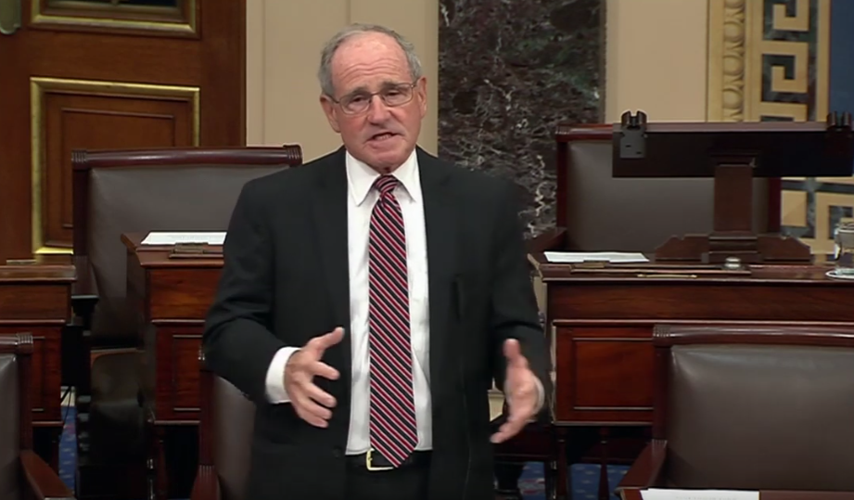
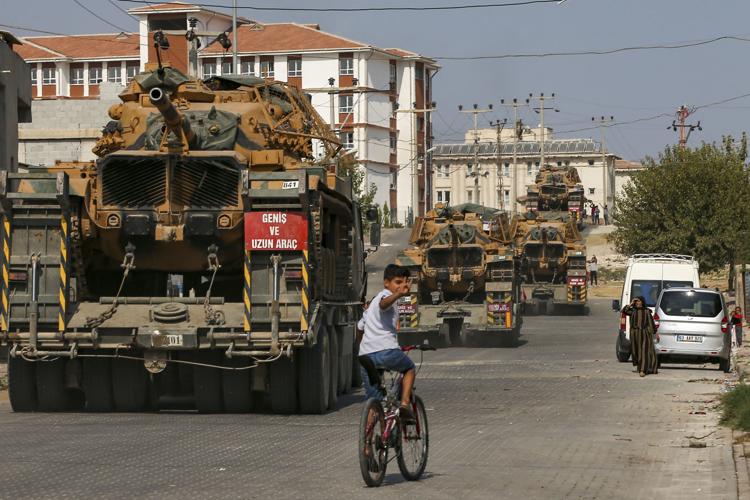

With members of Congress from both parties raising serious alarms about the Turkish assault on U.S.-allied Kurds in Syria, Idaho Sen. Jim Risch, chairman of the Senate Foreign Relations Committee, took to the Senate floor Thursday to tout bipartisan legislation in the works in his committee as a better path forward.
Risch said it'd be more effective than other legislative proposals, including a resolution that overwhelmingly passed the House on Wednesday opposing President Donald Trump’s move to pull U.S. troops out ahead of the assault.
“This is a very fluid situation, as we all know,” Risch said, “and certainly people, Americans who are watching this from home, are confused about the parties. And then when you overlay the politics on top of it, where you have the level of animus toward the commander in chief that there is at this point, it becomes very difficult to sort this out. So as chairman of the Foreign Relations Committee, I want to try to lay out some fundamentals here that we need to deal with.”
Risch, a staunch ally of Trump, told the Senate, “I think everyone agrees that the situation on the ground in Syria is an incredibly complex situation. It is difficult to understand and impossible to manage at some point, because of the fact that there are dozens and dozens of tribal entities that share religious or cultural or tribal affiliations either together or in opposition. The result of that is the mess that we’ve had in Syria for so long."
What's happening in northern Syria between the Kurds and the Turks "is a very serious situation," Risch said, "but this is not new. The animosity and the fight between the Turks and the Kurds has been going on for centuries.”
On Wednesday, the House overwhelmingly passed a bipartisan resolution objecting to Trump’s decision to pull U.S. troops out of the area after a phone conversation with Turkish President Recep Tayyip Erdoğan, after which Erdoğan launched the assault. Senate Minority Leader Chuck Schumer, D-New York, pushed to have the Senate vote Thursday on the House-passed resolution, but that was halted by an objection from Sen. Rand Paul, R-Kentucky.
Paul argued that the House-passed resolution would do "nothing to fix the problem" and said he was offering a counter-proposal that would also stop arms sales to Turkey. Paul also objected to any involvement of U.S. troops in the area without a declaration of war.
Risch’s seven-minute Senate floor speech came as he objected to taking up Paul’s bill. Any senator can object, blocking a move for immediate consideration of a bill.
Many Republican senators have been sharply critical of the president’s move; Sen. Mitt Romney, R-Utah, on Thursday called it a “a bloodstain in the annals of U.S. history." Risch has remained supportive of Trump, telling KBOI NewsTalk 670 host Nate Shelman last week, "I support that America has a commander in chief, and he has to make decisions on the battlefield, and that’s how these decisions should be made, is on the battlefield.”
Risch declined to say whether he supported or opposed Trump’s decision, telling Shelman, “Once the commander in chief makes a decision, whatever that decision is, America needs to get behind the commander in chief or we got a huge problem.”
In his Senate floor speech on Thursday, Risch said, "The Turks amassed 30,000 troops on the border with Syria ready to come in and take on the Kurds, who had moved into the northern part of Syria due to the failed state status of Syria.”
“To say that the president of the United States is responsible for this is simply a political statement that isn’t true,” Risch declared. “You can dislike the commander in chief. You can dislike the calls that he makes. But this is a war that has been going on between these two groups for centuries. It was going to happen. The fact that Erdoğan had amassed 30,000 troops on the border was a clear indication that it was going to go forward.”
The U.S. troops were standing between the two standing armies, Risch said, and the president pulled them "out of harm’s way."
The United States had 1,000 troops that had been partnering with Kurds in Syria; the administration said many would remain elsewhere in the Middle East to “monitor the situation.”
“So what do we do about this?" Risch said from the Senate floor. "Well, the House has passed a matter that the minority leader has talked about and wanted to pass. Sen. Paul has brought his idea to the floor. I want to tell you that the Foreign Relations Committee has been working on this since it blew up.
“Risch-Menendez is a bipartisan piece of legislation that addresses the issues that all of us are concerned about," he said. "It addresses the issues with Turkey, it addresses the issues with the Kurds, it addresses the issue that the minority leader addressed regarding the ISIS prisoners that are being held (in the region where the clash is taking place). It is a good piece of legislation."
With the bill, he said, "We have a comprehensive piece of legislation that does address this, that is the result of consultation between both the majority and the minority and the administration to get us a bill that can actually become law. And from my own standpoint, I’m always at a point where I want to reach an objective, I want to get to a result.”
“Sen. Paul’s and the other legislation cannot become law,” Risch said, with opposition from the administration. “This bipartisan piece of legislation, Risch-Menendez, that addresses this very, very serious issue can become law.”
When the House passed its resolution, Idaho’s representatives split, with 1st District GOP Rep. Russ Fulcher voting “no” and 2nd District GOP Rep. Mike Simpson voting “yes.” It passed, 354-60. Neither representative has responded to a request for comment from the Idaho Press.

(0) comments
Welcome to the discussion.
Log In