

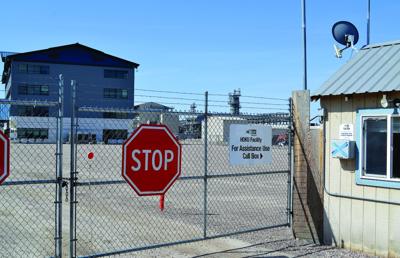
POCATELLO — Pieces of the Hoku plant in Pocatello, including transformers, reactor vessels and huge electric motors are finding new homes as JH Kelly tries to recoup its losses as the general contractor of the $700 million facility.
JH Kelly bought the Hoku plant after the company declared bankruptcy in 2013 for a purchase price of $8.3 million. Hoku, and all its subsidiaries, filed for Chapter 7 bankruptcy in federal court — leaving JH Kelly with $25 million in unpaid expenses. Despite being on the hook for millions of dollars, Kelly paid all 104 subcontractors that worked for the main contractor on the Hoku project.
“We did a worldwide marketing effort to sell the plant,” said JH Kelly senior vice president Mark Fleischauer. “We obviously wanted to find a user.”
Unfortunately, Kelly was unable to find anyone willing to purchase the plant as a whole unit.
“It’s a damn shame,” Fleischauer said.
Hoku Scientific Inc., based in Hawaii, started building the plant in Pocatello in 2007 when solar energy was a hot new industry and polysilicon prices were high.
The 67-acre heavy industrial site of the plant is leased from the city of Pocatello and improvements to that area in the northwest part of the city included a new Idaho Power substation to provide adequate power. It also has a natural gas line that is capable of meeting the needs of the polysilicon producing plant.
All that is moot now.
After failing to find a buyer for the entire intact facility, JH Kelly hired Hillco Industrial and Perry Videx to start selling pieces of the structure. To date it has been done with private sales and limited auctions.
Kelly also filed a lawsuit against Hoku and its parent company Tianwei New Energy Holdings, alleging fraud and racketeering. Last November, U.S. District Judge Lynn Winmill dismissed the lawsuit against Hoku.
JH Kelly alleged the defendants knowingly misrepresented that Tianwei would provide Hoku the financial support needed to fund the project to completion, thereby committing fraud, and in the process violating state and federal racketeering law.
“This support never fully materialized to benefit JH Kelly, but that fact does not establish fraud on the part of the defendants,” Winmill wrote in his decision.
Fleischauer said the Winmill decision has been appealed and he believes the judge erred in his decision.
The JH Kelly executive said the appeal should be heard and decided in three to six months.
In the meantime, Kelly is disposing of parts of the plant to recoup its losses.
“It’s certainly not the way we drew it up,” Fleischauer said about the outcome.

(0) comments
Welcome to the discussion.
Log In