


Though a competitive race for the Democratic gubernatorial nomination drew tens of thousands of voters to the polls last week, it’s difficult to make the case that Idaho’s minority party will reverse its fortunes anytime soon.
For example, in Southeast Idaho not one Democrat ran for an elected county or legislative position in five of the seven counties and no Democrat ran for the vacant Idaho House of Representatives seat left open by Kelley Packer, R-McCammon, who lost her bid to be the GOP nominee for lieutenant governor.
Further, not a single Democrat opted to run to be Idaho’s next state treasurer or controller.
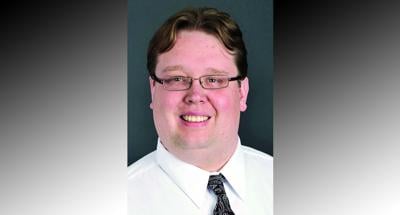
Nonetheless, the leader of Idaho’s Democratic Party, Bert Marley, told the Journal that he is pleased with the number of Democratic voters who cast ballots last week, adding that the number of Democratic candidates in the primary was “about par for the course.”
“Statewide, it was exciting to have a real primary where we had candidates for a number of different offices that were very competitive,” Marley said. “It seems like I was on the phone or on TV all of Tuesday night up in Boise as we were dealing with ballot shortages and other issues because the turnout was much greater than any of the county officials expected.”
Marley said the Democratic Party had selected a candidate to run for the state treasurer position but the individual withdrew from the race close to the primary election, which prevented the party from finding another well-qualified person before the ballots were finalized. No Democrat filed to run for state controller, Marley added.
“It seems like almost every election cycle we can’t find anyone interested in challenging every seat,” Marley added. “And I think in part a lot of people look at these seats as partisan races but the jobs they do are really policy jobs. So people don’t get as excited about it.”
Though Idaho has historically leaned more conservative, Bannock County and especially its county seat of Pocatello have been viewed as a longstanding Democratic stronghold in the state. That seemed to change when Dustin Manwaring, R-Pocatello, won a seat in the Idaho House of Representatives in 2016.
Whispers among state lawmakers in Boise indicated the Democratic Party would focus heavily on retaking Manwaring’s seat. The same case could be made for the District 28 vacancy left by Packer’s lieutenant governor bid.
However, both Democratic candidates battling to challenge Manwaring, 52-year-old union electrician Chris Abernathy and Sean Fay, a 31-year-old father and Idaho State University graduate student, combined for fewer than 2,000 votes last — about 400 shy of Manwaring’s total vote count of 2,331.
Further, neither Abernathy nor Fay viewed each other as competitors prior to the primary and neither candidate moved to activate voters with official campaign websites or social media pages.
That no Democrat decided to run for Packer’s seat at all came as a letdown to Marley. He said again a Democrat was expected to run for that position but didn’t.
“I was really disappointed because there was some pretty good recruiting going on for that seat,” said Marley about Packer’s House post. “We had three people interested in running. Someone stepped forward and said they would run, and then after the filing date was over that person withdrew.”
The lack of Democrats running for numerous county positions throughout Southeast Idaho was not surprising to Marley, who said it’s always been tough for members of the state’s minority party to break through in those areas.
“It’s always been an uphill battle in some of these other counties,” Marley said. “I don’t know the exact reason but it’s interesting that people will focus on one issue that is hyper-critical to them and decide to run. That didn’t appear to happen in some of these other counties.”
But the lack of Democratic candidates was no surprise to Dan Cravens, the Bingham County Republican Party chairman.
Cravens said that regarding Packer’s seat, the lack of a Democratic challenger “is a function of the fact that the (legislative) district Kelley Packer was in is a very Republican district.” The district includes all of rural Power County and rural areas of Bannock County.
“Democrats know that their platform and agenda won’t do very well in Power and southern Bannock counties,” Cravens said.
The reasoning no Democrats decided to challenge their Republican counterparts for a plethora of county positions in Southeast Idaho, according to Cravens, is because most of the Democratic Party is out of touch with how most Idahoans think and believe.
“The Democrats are definitely a minority party and they have not acclimated themselves to how Idahoans think or do government,” Cravens said. “It’s really a reflection of the Democratic Party not being very popular. If you’re running for office and decide to run as a Democrat — because of the unpopularity of the party in the state — you’ve pretty much made your run that much harder.”
Though the number of Republican primary voters last week very much outpaced Democratic voters, Marley said he was pleased with the number of first-time Democratic voters who came out this year, adding that he doesn’t put much weight on primary vote tallies when trying to predict outcomes when November rolls around.
“If you compare the number of Democrats and Republicans who voted it’s always a little daunting,” Marley said. “It’s always an uphill climb but there are some feelings that we can move the needle a little this year.”
Marley continued, “I think we got a good shot at winning a state race or two. Right now, the future looks pretty dang good.”

(0) comments
Welcome to the discussion.
Log In