

A second fatal shooting in St. Louis Tuesday fueled racial tension in neighboring Ferguson as authorities there asked for quiet and reconciliation 10 days after the police killing of a black teen set off riots, looting and protests.
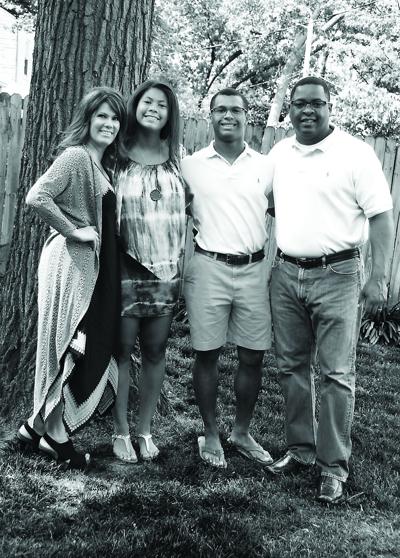
Avery Griggs is originally from Pocatello, but for the past 17 years he’s lived in the St. Louis area. Today he lives in the bedroom community of Kirkwood, Mo.
Griggs said the chaos after the death of Michael Brown, an 18-year-old unarmed black man who was shot and killed by a white policeman in the suburb of Ferguson, has not spilled into St. Louis or surrounding communities, but the violence isn’t stopping either.
“I am very worried about this,” Griggs said. “It just doesn’t seem to be ending.”
Adding to the tension, St. Louis police shot and killed a 23-year-old black man who was reportedly wielding a knife and behaving erratically on Tuesday. The identity of the man was not released, but news reports claim he was well-known in the community and was said to have a learning disability.
Brown’s parents asked for an end to the violence last week, as did President Barack Obama and the Reverend Al Sharpton.
Benjamin Crump, an attorney hired by Brown’s family, told ABC News that prosecution of the shooter would bring justice in the case and an end to the conflict.
So far, 52 people have been arrested and two officers were injured.
According to ABC News reports Wednesday morning, hostility in Ferguson seemed to be easing and the protests were smaller and becoming more subdued.
ABC News also reported that Attorney General Eric Holder was in Ferguson Wednesday to meet with FBI and other officials conducting an independent investigation into Brown’s death. A grand jury is also expected to review evidence to determine if the officer should be charged in Brown’s death.
According to autopsy reports, Brown was shot six times and he could have survived the first five shots, but the sixth shot to the top of his head was fatal. The examination indicates that Brown was bent over when the fatal shot was fired.
Brown was also shot four times in the arm and reports Tuesday indicated that his arm was raised in a defensive position when at least one of the shots were fired, other wounds suggest that Brown’s back could have been turned to the shooter when some of the shots struck him.
The communities of Ferguson and adjacent Dellwood have been under siege from looters, violent protesters and rioting. City police, state troopers and the National Guard were called out to bring the situation under control.
Griggs, who is black, grew up in Pocatello and he said he was shocked by the racial tension that exists in St. Louis.
“Race relations have always been a problem in St. Louis and they always will be,” Griggs said. “I came here from Idaho where I thought everyone was my friend. In St. Louis, they’re all about what high school you went to. Of course, Catholic is first on the list, then private schools and last on the list is public school. They really do try to put you in a box.”
Racial profiling in north St. Louis County and the fact that the community of Ferguson is almost 70 percent black, but there are few African American police officers on the job, all contributed to the growing racial tension, Griggs said.
“(Racial profiling) hasn’t happened to me, but I know people who it has happened to,” Griggs said.
Griggs, sales manager for Aramark Uniform Services, earned a full ride football scholarship to University of Missouri where he played for two years before returning to Idaho and finishing college at the University of Idaho in Moscow.
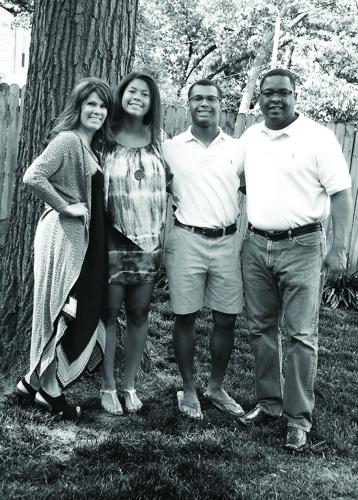
His wife Nancy Griggs is a native of St. Louis and the couple raised their two children, Marcus Griggs, a freshman at DePaul University, and Morgan, a sophomore at Kirkwood High School, in the urban area.
“Kirkwood is a great community. It reminds me a lot of Idaho,” Avery said. “But there are areas of St. Louis where you just don’t go late at night. St. Louis is one of the most dangerous cities in the U.S.”
Avery said several peaceful demonstrations have taken place in conjunction with the riots, but those have gotten less news coverage than the more violent confrontations.
Brown was shot and killed just after noon on Aug. 9. Darren Wilson was later identified as the officer involved in the shooting.
St. Louis County Police Chief Joe Belmar said at a news conference following the shooting that Brown allegedly physically assaulted Wilson and during a struggle between the two, Brown reached for Wilson’s gun.
One shot was fired inside the car and the other gunshots were fired outside of the vehicle.
The police car involved in the incident not equipped with a dashboard camera and officers in Ferguson do not wear body cameras.
A determination by shooting investigators is expected next week.
“All we really know is that Brown was unarmed,” Avery said. “I just hope that justice is served with the decision next week.”
Avery said most of the looting and violence is being perpetrated by individuals from outside of Ferguson and Dellwood.
“It has to stop, for the residents of Ferguson and Dellwood,” Avery said. “There are passionate, uncompromising people on both sides of the issue, but it has to be stopped.”
Avery said a more diverse police force and multi-cultural training for officers would be a good place to start the healing process.
While Idaho is far removed from the violence in Ferguson, the Gem state is not insulated from racism and discrimination.
Russell Sanders moved to Pocatello as a small boy, but continued to spend summers in Southern California and he said he’s experienced racism in both communities.
“My dad was a product of Watts and Compton,” Sanders said about the riots that took place in California in the 1960s.
His father, Hayes Edward Sanders, won a gold medal in the heavy weight boxing event during the 1952 Olympics.
Hayes attended Idaho State University until he was drafted by the U.S. Army.
“He got drafted by the Army, but ended up enlisting in the Navy,” Russell said.
Racial tension grew in the Watts and Compton areas for years prior to the 1965 riots and Russell said the situation in Ferguson shows that not much has changed since then.
Years ago, Russell, a long-time local radio personality, said he was profiled and detained by police as he walked home after his regular jazz show aired.
As he approached the gate to his mother’s east side home, Russell said, two Pocatello policemen who had shadowed him all the way, ordered him to stop and then proceeded to interrogate him.
“They said they were looking for a black man from Wyoming,” Russell said. “I asked them, ‘Do I look like I walked from Wyoming?’”
Sadly, Russell said nearly a half-century after the turbulent civil rights movement of the 1960s, not much has changed for people of color in many regions of the country.
“There is this whole Kumbaya movement but 60 years later, race is still an issue,” Sanders said. “In some areas, people are still treated the way they were treated in 1960.”
Sanders recalled a train trip to Louisiana that he took with his grandmother, Elizabeth B. LaRue, when he was four years old.
“Everything was good until we got to Arkansas, then we had to get on an all-black train,” Sanders said. “On the train in Denver they made me bacon and my grandma even got them to crisp it up for me. On the second train, I didn’t even get a glance.”
When they got to the Big Easy, Elizabeth, a light-skinned black woman, couldn’t get a cab with her grandson standing by her side.
“She hailed the cab and then called me out when it stopped,” Sanders said. “The driver was just really quiet the whole way.”
The trip was also the first time Russell had seen segregated restrooms.
“I realized then that where I came from was different,” Russell said.
But the racism of the 1960s was present in Southeast Idaho as well. Once a white man in a suit and tie forbid Russell to drink from a water fountain, but LaRue quickly came to his defense.
“Sure he can drink from the water fountain,” LaRue was said to have told the stranger. “See that, it says WPA, his grandfather built it and put it there.”
And he did, that exact fountain, as part of the federal Works Program Administration program, Russell said.
Charles Woods Griggs is Avery’s uncle and also a native of Pocatello.
In seventh grade, Charles was a popular student and a star athlete. He was even chosen duke at the Franklin Junior High homecoming, but Charles was not allowed to dance with the white girl who was named the duchess.
“I don’t think that I have been a victim of profiling, but I have definitely been discriminated against,” Charles said.
After graduating from Pocatello High, Charles traveled to Los Angles to see his father and he visited Watts more than five years after the 1965 riots.
“The stench and the ruin and the ashes, it was still there,” Griggs said. “I’m afraid that’s where Ferguson is heading if they don’t stop it.”
Charles’ said his dad Shoster Stanley Griggs kept apartments in Watts and Beverly Hills because he worked in both cities.
“In Beverley Hills I wasn’t allowed to go out the front of the building,” Charles said. “If you did, you could expect the cops to be calling you ‘Leroy.’”
While both Charles and Russell consider themselves Idahoans, Charles said their roots are in the South.
“We can’t solve the problems of Ferguson from Pocatello,” Charles said. “Every community is different, but I’m afraid the outlook is bleak. I just don’t think people can come together.”
Recently, Russell was one of three African Americans in Southeast Idaho who received letters from a member of the Aryan Nations who claimed that his evolution into racism was set in motion when he moved to Detroit, where the majority of the population is African American, but Russell doesn’t buy it.
“Blacks have been more democratic than any other minority group,” Russell said. “We waited our turn. We fought for our rights to come from slavery to where we are now. Slaves built the White House and finally a black man gets to live in it.”
Depending on the determination of the federal investigation into the killing, Russell and Charles agreed, the situation in Missouri could get worse.
“If there is rioting, it will most likely be short and will be swept under the rug,” Russell said.

(0) comments
Welcome to the discussion.
Log In