

What would happen if the supervolcano at Yellowstone National Park suddenly erupted?
It’s a terrifying thought, to say the least.
The eruptions of supervolcanoes are thousands of times larger and more powerful than normal volcanoes. Though there are very few known supervolcanoes on Earth — the one that exists under Yellowstone National Park is one of the most researched and well-documented.
This supervolcano erupted three times in the distant past, with the last known caldera-forming supereruption occurring about 640,000 years ago. Each eruption drastically altered the North American geological landscape and had far-reaching impacts felt across the world.
But according to Dr. Shannon Kobs Nawotniak, a volcanologist and assistant professor with the Department of Geosciences at Idaho State University, it’s difficult to know exactly what a supervolcano eruption would look like.
“Nobody has ever seen a supervolcano erupt, and there’s never been any human documentation of an event like this occurring,” she said. “The last eruption at Yellowstone occurred long before humans came to North America.”
Volcano
Continued from A1
The last time a supervolcano erupted anywhere on Earth was approximately 70,000 years ago in Lake Toba on the Indonesian island of Sumatra. This event is believed to have killed most of the humans beings living on the planet at the time. But historians and archeologists have never uncovered any human record of the eruption from that time period.
Without human documentation, geologists have had to use geological records and scientific research to piece together the events that occurred in Yellowstone 640,000 years ago.
Last month, the Associated Press reported scientists discovered a massive magma chamber underneath the supervolcano large enough to fill the Grand Canyon 11 times over. This new discovery was important because it gives researchers a better understanding of the park’s volcanic plumbing system.
With each new discovery, scientists get closer to fully understanding the mysteries of Yellowstone’s supervolcano and what to expect from a supereruption.
Unzipping
According to Jake Lowenstern, the scientist-in-charge of the Yellowstone Volcano Observatory, the buildup to any volcanic eruption could take weeks, months or even years. Some eruptions are quick, but some can take decades.
But the warning signs of an eruption of the Yellowstone Caldera would be apparent. Scientists at the observatory, which closely monitors the park’s volcanic system, would be the first to see the signs.
“We’d expect abundant large earthquakes, doming of the earth’s surface and rock-hurling explosions from the geothermal areas,” Lowenstern said in a written statement. “There would be way more activity than we currently observe.”
Dr. Mike McCurry, a volcanologist and professor at ISU’s Department of Geosciences, said Yellowstone would go through an “unzipping” process before a supereruption. Massive rifts would start to form in the park, and lava reservoirs would move to the surface, some potentially as large as 30 miles across.
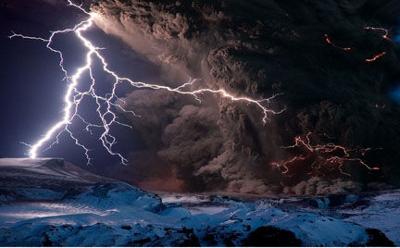
Judging from evidence from the last supereruption, this violent movement in the Earth would be concluded by a massive eruption. The explosion would send molten rock and debris in every direction, killing and destroying everything within a 50-mile radius. The sound of the explosion would be among the loudest sounds ever heard.
From Southeast Idaho’s perspective, Nawotniak and McCurry said the eruption would look like a giant mushroom cloud filling the northern sky. Pocatello and the surrounding areas would likely be far enough away to survive the blast.
But for Southeast Idaho and the rest of the world, the worst would be yet to come.
Life and death
When the Yellowstone Caldera last erupted, it sent so much volcanic ash into the air it blanketed lands as far east as the Mississippi River.
Scientists saw the impact of volcanic ash firsthand in 1980 after the eruption of Mount St. Helens. Nawotniak said the ash from that volcanic eruption circled the globe twice in 14 days, and towns surrounding the volcano in Washington state were put at a standstill because of the ashfall.
But the volcanic ash produced from Mount St. Helens is just a fraction of what a supereruption would produce.
Nawotniak said the eruption in 1980 ejected about 0.07 cubic miles of ash. But the ash from the last supereruption in Yellowstone is estimated to have ejected over 240 cubic miles of ash.
If the Yellowstone Caldera suddenly blew, residents in Southeast Idaho would have a short time before the area became inundated with ash, so a quick escape to safer ground might be possible after the eruption.
“When the ash comes down, the problem is it doesn’t melt like snow,” Nawotniak said. “It would just sit there.”
Unlike the ash produced from small fires, the ash produced by a supervolcano would be filled with minuscule fragments of jagged rocks. This would clog up and severely damage all the machines in the area, grounding all airplanes and likely destroying automobile engines. With mechanical vehicles at a standstill, attempts at an escape or a rescue would likely fail.
Plus, the ashfall would make the air and water quality incredibly hazardous. Breathing would become very difficult for some residents, particularly those with asthma and respiratory ailments,
With aviation and rescue vehicles unable to get in or out of the area, the stranded Southeast Idaho residents who did not have access to clean water or prepackaged food would be facing a dire life and death situation.
Year without a summer
But Southeast Idaho would not be the only place dealing with the disastrous aftermath of a Yellowstone supereruption.
If the previous supereruption is any indication, much of the country’s grain belt in the American Midwest would be covered in ash as well. The ash would likely destroy most of the crops and livestock, which could lead to a famine and cause devastating economic consequences the world over.
But once the ash gets into the atmosphere and begins to circle the globe, it could hinder or completely block out sunlight for many years in areas across the world.
Historians have already seen a similar event occur within the past two centuries. In 1815, Mount Tambora in the Dutch East Indies erupted. At the time, it was the most powerful volcanic eruption seen on Earth in at least 1,300 years. The Northern Hemisphere witnessed a volcanic winter the following year, as ash deposits settled in the world’s atmosphere and hindered sunlight.
The effects of Mount Tambora’s eruption were felt in 1816 (nicknamed “The Year Without a Summer”). During that time, the average global temperature dropped between 0.7 and 1.3 degrees Fahrenheit, and farmers in North America and Europe dealt with massive crop failures, leading to widespread hunger and economic disaster.
In the aftermath of another Yellowstone supereruption, the world could have another so-called Year Without a Summer but on a more massive and destructive scale.
Pop culture
What are the odds of another supereruption occurring at Yellowstone in our lifetime? According to scientists, the odds are astronomically small.
“I’d be more concerned about getting killed crossing the street,” McCurry said.
But the small odds haven’t curbed the public’s fascination with the Yellowstone Caldera and supervolcanoes.
Every year, millions of visitors from around the world travel to northwest Wyoming to see the geysers, the lakes and all the other unique natural features that are byproducts of the cataclysmic eruption that occurred hundreds of thousands of years ago.
The supervolcano has even entered the realm of pop culture. The doomsday film “2012” depicted a Yellowstone Caldera eruption and its disastrous effects, while the National Geographic Channel and PBS have aired numerous documentaries on the subject during the past 10 years.
But there has also been a downside to the growing awareness of the park’s volcanic history. Every report of an earthquake or sudden geological change in the landscape in Yellowstone brings fears of an impending supereruption.
“Yes, the land changes at Yellowstone quite frequently, but that’s perfectly normal,” McCurry said.
In April 2014, the Associated Press said the National Park Service was fighting rumors of a possible supereruption after a video depicting bison allegedly running away from the supervolcano appeared on YouTube. However, a parks spokesman said the animals were actually running toward the park’s interior and the volcano.
But Nawotniak and McCurry said widespread fears of an impending supereruption could scare tourists away from Yellowstone National Park, thus causing an economic depression in the region.
There were fears that the Long Valley Caldera in eastern California was going to erupt after a strong earthquake swarm occurred in May 1980. However, the eruption never occurred, but the fears scared tourists away and caused a negative economic impact in area towns.
Nawotniak said she has had to reassure local residents at times that it is safe to visit Yellowstone.
“Luckily, the more dangerous the natural disaster, the less likely it’s going to happen,” she said.

(0) comments
Welcome to the discussion.
Log In