

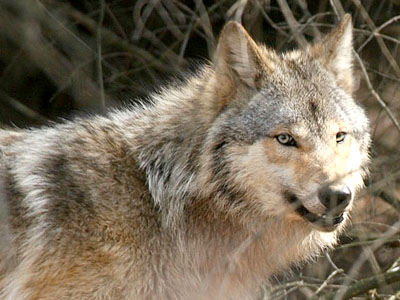
When the U.S. Fish and Wildlife Service releases its annual wolf population estimates for the Rocky Mountain region next month, they will show that the overall wolf population in Idaho, Montana and Wyoming is virtually identical to what it was last year.
Wolves are officially counted once a year at the end of the year, and last year there were an estimated 1,650 wolves in the Rocky Mountain region: 850 in Idaho, 500 in Montana and 300 in Wyoming.
While the final numbers won’t be released until the USFWS’ annual wolf report is completed in March, a draft report indicates there will again be about 1,650 wolves in the Rocky Mountain region.
“For all intents and purposes, it’s the same,” said Ed Bangs, wolf recovery coordinator for the USFWS, the agency that reintroduced wolves in the region in the mid-1990s. “The wolf population’s doing fine.”
That’s despite the fact that upward of 600 wolves were killed or died in 2009, a record total by far. As of Feb. 11, 152 wolves had been killed by hunters in Idaho and another 72 had been killed by hunters in Montana. Wyoming does not have a wolf hunting season.
Idaho has an overall wolf hunt quota of 220, and the state’s wolf hunting season ends March 31. Montana’s season ended in November after that state came within three of reaching its quota of 75.
Bangs said that based on annual numbers before this year’s wolf hunts, an average of 26 out of every 100 wolves in the region died each year. Of those 26, 10 were killed illegally, 10 were killed as a result of government control actions, three were killed accidentally by people, mostly by car or train strikes, and three died from natural causes.
Despite that, the wolf population was still growing at a rate of about 22 percent a year.
Bangs said the final report will show wolf numbers in Wyoming are up a little bit, Montana’s population is about the same, and Idaho’s total will likely be down slightly. The report will list all known wolf packs in the Rocky Mountain region, including a couple in Washington and Oregon.
Bangs said although the totals are just estimates, they’re darned good ones.
“We survey wolves more extensively than any other wildlife in North America,” he said. “The wolf count is extremely accurate compared to other wildlife.”
Bangs said he can understand why some people think the wolf numbers are actually a lot higher. The average wolf pack covers an area of up to 500 square miles and the animals get around a lot and leave tracks everywhere.
So if someone spends a lot of time outdoors, “It gives the impression there are freaking wolves everywhere,” he said. “It doesn’t surprise me the average guy thinks there are wolves everywhere.”
Bangs said the recent estimates show the first-ever wolf hunts in Idaho and Montana didn’t harm the overall wolf population.
“The bottom line is, the hunts didn’t hurt the wolf population at all,” he said. The state fish and game commissions “did a good job of planning everything. By and large, it was a very successful hunt.”
While the hunts didn’t make a dent in the wolf population, they did prevent them from growing at their recent average rate of 22 percent per year, which is what they were designed to do.
That means some major tweaking in the hunting quotas or rules might be necessary for Idaho to meet its goal of managing wolves at their 2005 level of 520 animals. If a lawsuit by environmental groups seeking to have the wolves placed back on the endangered species list is successful, it would stop the hunts and make reaching that goal all the more difficult.
A final ruling by a federal judge in that case is expected by both sides about the middle of this year.


(0) comments
Welcome to the discussion.
Log In