

Although President Barack Obama had called for Congress to help fund the purchase of 50,000 body cameras for police to wear and record their interactions with the public, a task force appointed by him following the deaths of unarmed black men in Missouri and New York found that there are many complex legal and privacy issues to consider when using such technology.
The President’s Task Force on 21st Century Policing, which was established in December, was asked to make recommendations on policing practices that could help reduce crime while building public trust, and find ways to improve relations between law enforcement officials and communities, and it recently released its interim report.
"There's been a lot of talk about body cameras as a silver bullet or a solution," Obama said Monday. "I think the task force concluded that there is a role for technology to play in building additional trust and accountability but it's not a panacea. It has to be embedded in a broader change in culture and a legal framework that ensures that people's privacy is respected.”
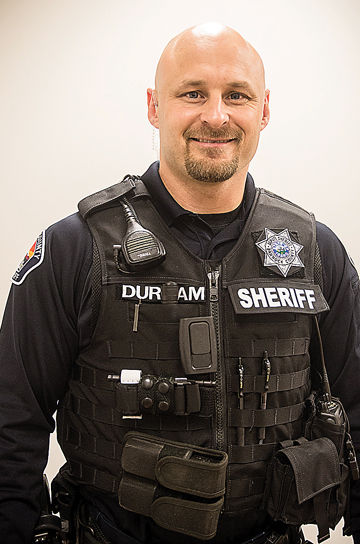
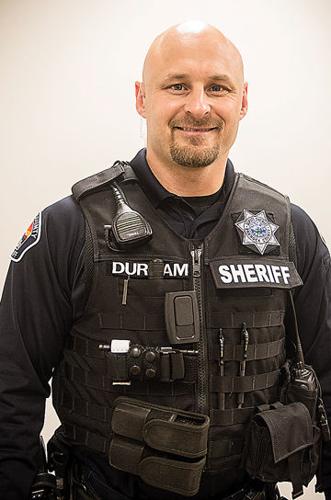
Capt. Kevin Fonnesbeck with the Bannock County Sheriff’s Office said they’ve been using body cameras for a few years and they can be a helpful tool since they record what’s happening in front of the officer no matter where the officer is at. Car cameras, which they also use, are much more limited in what they can pick up, he said.
Still, he feels they go too far when they start replacing the word of an officer, especially since cameras can malfunction, don’t necessarily record everything that the officer can see and aren’t always turned on due to privacy issues in certain situations.
“For years and years an officer’s word felt like it meant something in the courts,” he said. “Now, unless there’s a video of everything, (it seems like an) officer’s word does not matter anymore.”
Still, there are advantages to using cameras and more and more law enforcement agencies are looking at them.
Bingham County Sheriff Craig Rowland said his office just ordered body cameras for all of his patrol officers and detectives, and the Pocatello Police Department wants to begin purchasing cameras as it can afford to do so in the future.
Sgt. Ralph Daniels with the Pocatello Police Department says cameras can give people a better idea of what happened during an incident, and they may even help prevent some problems since both officers and community members will likely be more cautious if everything they are doing is being recorded.
“It may head off an issue,” he said.
But cameras are also expensive. Bingham County used Homeland Security funds to cover the $899 cost of each of its body cameras, Rowland said.
Daniels said Pocatello won’t be able to purchase cameras for all of its officers for a while due to the cost.
And then there’s the additional expense that come with storing the recordings.
Fonnesbeck said Bannock County recently had to upgrade its memory system so that it will have enough room to keep recordings for roughly six months or more. Before, their system would only keep the recordings for about 40 days before the information was deleted to make room for other recordings.
And like the task force found, there are many things to consider when it comes to releasing those videos to members of the public. Daniels, who has been researching body cameras for about six months, said he’s heard of police departments that had trouble with people getting copies of the videos and then posting them on social media sites.
Due to such privacy issues, Fonnesbeck said Bannock County won’t release the videos without a subpoena, and Rowland said Bingham County will require people to go through the prosecutor’s office to request copies.
Still, many law enforcement officers agree that body cameras are useful tools, and could even assist in efforts to build public trust if they are used correctly.
The president said last year's deaths of Michael Brown in Ferguson, Missouri, and Eric Garner in New York City exposed "deep rooted frustration in many communities of color around the need for fair and just law enforcement." He said the policing task force that he appointed found it's important for law enforcement to improve training, data collection and cooperation with the communities they cover.
"The moment is now for us to make these changes," Obama said from the White House during a meeting with members of the task force, who worked for three months to develop the recommendations. "We have a great opportunity coming out of some great conflict and tragedy to really transform how we think about community law enforcement relations so that everybody feels safer and our law enforcement officers feel — rather than being embattled — feel fully supported. We need to seize that opportunity."
The task force made 63 recommendations after holding seven public hearings across the country that included testimony from more than 100 people. The panel also met with leaders of groups advocating for the rights of blacks, Hispanics, Asians, veterans, gays, the disabled and others.
Obama said the task force found the need for more police training to reduce bias and help officers deal with stressful situations. He recognized a particularly controversial recommendation would be the need for independent investigations in fatal police shootings.
"The importance of making sure that there's a sense of accountability when in fact law enforcement is involved in a deadly shooting is something that I think communities across the board are going to be considering," Obama said.
Specifically, the task force recommended external independent criminal investigations and review by outside prosecutors when police use force that results in death or anyone dies in police custody, instead of the internal investigations that are the policy of some law enforcement agencies. The task force suggested either a multi-agency probe involving state and local investigators, referring an investigation to neighboring jurisdictions or the next higher level of government. "But in order to restore and maintain trust, this independence is crucial," the report said.
Bill Johnson, the executive director of the National Association of Police Organizations, said an outside investigation of a police-involved shooting may make sense in limited circumstances when a police department has few resources. But in the vast majority of cases, he said, it is unnecessary and perhaps even counterproductive.
"I think it helps to drive a wedge between a local police department and the community it serves — which is exactly contrary to what the intent of this police task force was supposed to be," said Johnson, whose organization is an umbrella group of police unions. "I think it sends a message that your local police can't be trusted."
The task force echoed calls from officials including Attorney General Eric Holder and FBI Director James Comey for more complete record-keeping about the numbers of police-involved shootings across the country. Such data is currently reported by local law enforcement on a voluntary basis, and there is no central or reliable repository for those statistics.
"There's no reason for us not to have this data available," said Philadelphia Police Commissioner Charles Ramsey, a task force co-chair, who said he was surprised to learn that there were no reliable records kept. "Now that we know that this does not exist, it is our responsibility to do everything we can to develop that information."
Ramsey also pointed out that the task force recommended decoupling immigration from local law enforcement to help improve police relationship with immigrant communities where residents may fear calling for help if they or someone in their family is in the country illegally. He said information on immigrant felons would remain available under the panel's recommendations.
Laurie Robinson, a professor at George Mason University and co-chair of the task force, told reporters the type of community-police relations envisioned by the report does not happen quickly.
"It takes time, it takes relationship-building and it doesn't happen overnight," she said.

(0) comments
Welcome to the discussion.
Log In